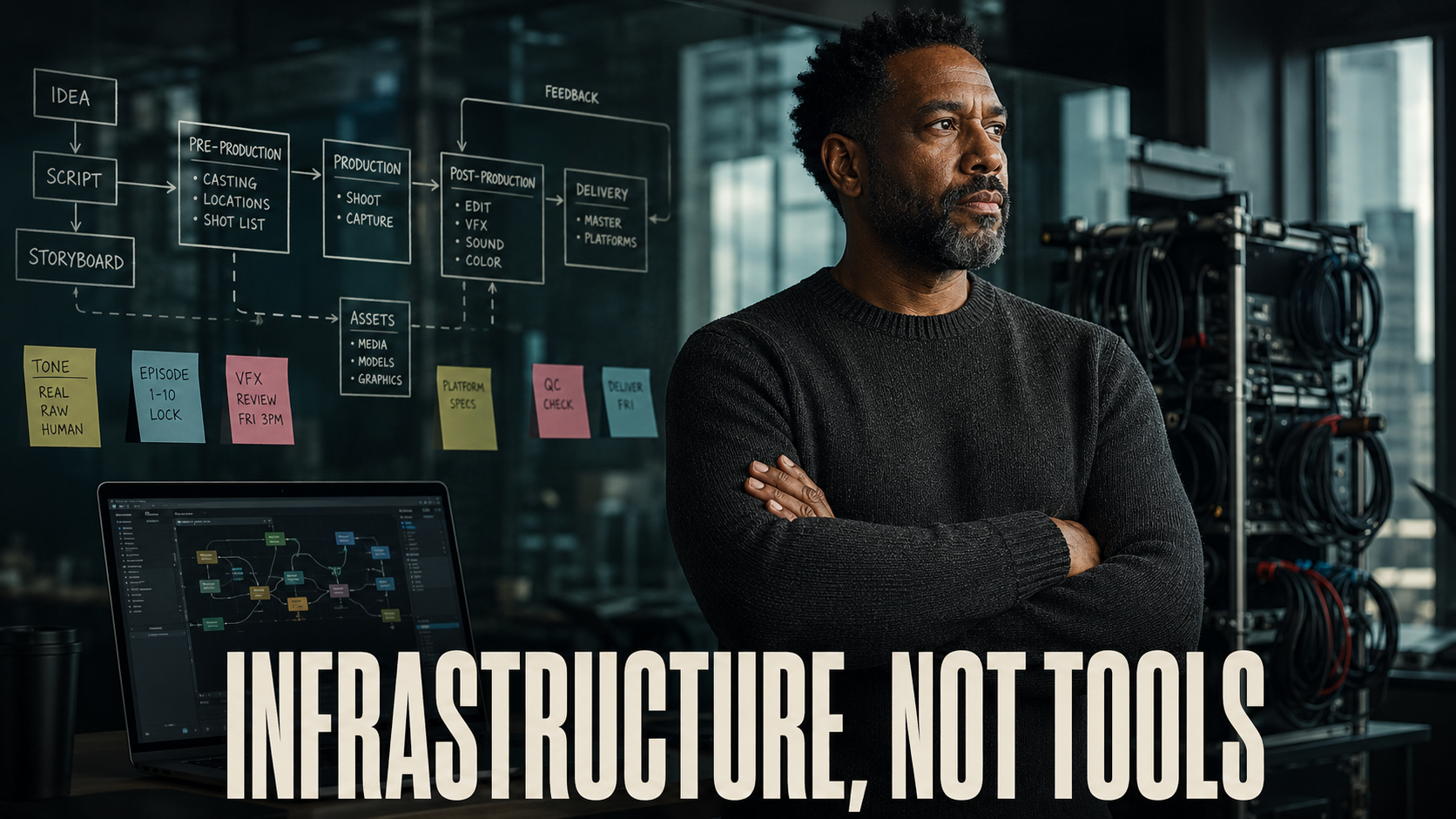
Microdrama production infrastructure is the persistent layer of locked characters, world assets, orchestration logic, and export pipelines that lets a studio produce vertical drama episodes on demand, in a day, without rebuilding context for every shot. As of 2026, the microdrama market is on track for 11 billion dollars plus in global revenue, and the studios scaling fastest are not buying more AI video tools. They are replacing tool stacks with infrastructure.
Tools Produce Clips. Infrastructure Produces Series.
The AI video market in 2026 is crowded with excellent generators. Text to video quality is no longer the differentiator, and prompt to publish workflows are rapidly replacing traditional editing software. But almost every popular AI video generator shares one architecture decision: it is session based. You open a session, you build context, you generate, and when the session ends, the context dies. For a marketer making one ad, that is fine. For a microdrama studio producing a 60 episode season with over 2,000 shots, it is a structural failure.
Infrastructure thinking flips the model. Instead of asking how good is this clip, it asks how much of this work compounds. A locked character asset used across 2,000 shots compounds. A genre beat template reused across five series compounds. A prompt written from scratch in a fresh session compounds nothing.
The Four Layers of Production Infrastructure
1. The persistent production graph. Every character, location, prop, and style rule lives as a node in a graph that never resets. This is the foundation of character consistency in AI video. On Vertex, MinionArts' production OS, this is a node based persistent graph: shot 1 and shot 2,000 reference the exact same locked identity.
2. Character and world lock. Locking means identity is enforced by the system, not by prompt discipline. Faces, wardrobe, voice, and set logic hold across sessions, operators, and weeks of production.
3. The orchestration layer. An AI Director agent sequences shots, applies pacing rules, and manages regeneration. One operator supervises an episode instead of hand prompting 40 shots.
4. The publish pipeline. Episodes export as platform ready 9:16 vertical video with captions and metadata. Vertical format matters commercially: vertical video sees roughly 90 percent higher engagement than horizontal equivalents.
Why This Matters Now
The economics of vertical drama are brutal and getting more so. Chinese platforms added roughly 50,000 AI native titles to Douyin in March 2026 alone. AI assisted microdramas in China are produced at a fraction of conventional web drama cost, which means platforms can place many more content bets. In a hits driven market, the studio that can test ten series wins against the studio that can test one. That volume is impossible on session based tools where every episode restarts the continuity problem from zero.
How to Tell Tools from Infrastructure
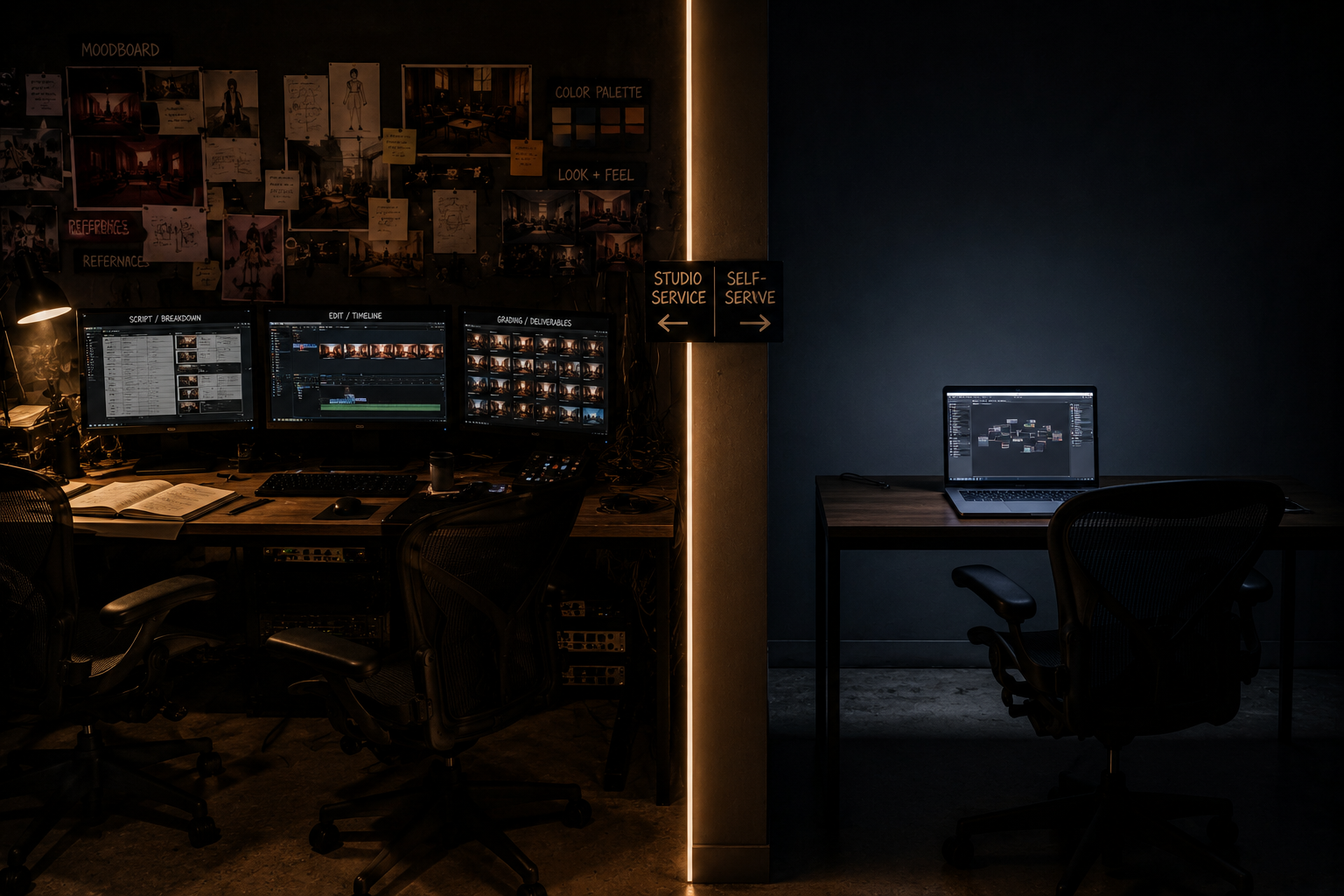
A simple audit: infrastructure persists, tools reset. Infrastructure lets your output compound, tools make you start over. Infrastructure lets one operator run an episode, tools need one operator per shot. Infrastructure enforces continuity by design, tools depend on the discipline of whoever wrote the last prompt. If your production stack loses knowledge every time a session closes or a team member changes, you are renting tools, not running a studio.
A Concrete Comparison: One Season, Two Stacks
Take an identical brief: a 60 episode romance thriller, 90 seconds per episode, three recurring leads, eight locations. Run it through both models.
On a tool stack: the team assembles four to six subscriptions covering script assistance, image generation, video generation, voice, and editing. Each session begins with context reconstruction. Character consistency depends on prompt libraries maintained by hand, and every operator maintains their own. When the strongest prompter goes on leave, output quality visibly dips. The season ships, but the team's velocity in month three is roughly the same as month one, and the next series starts from zero.
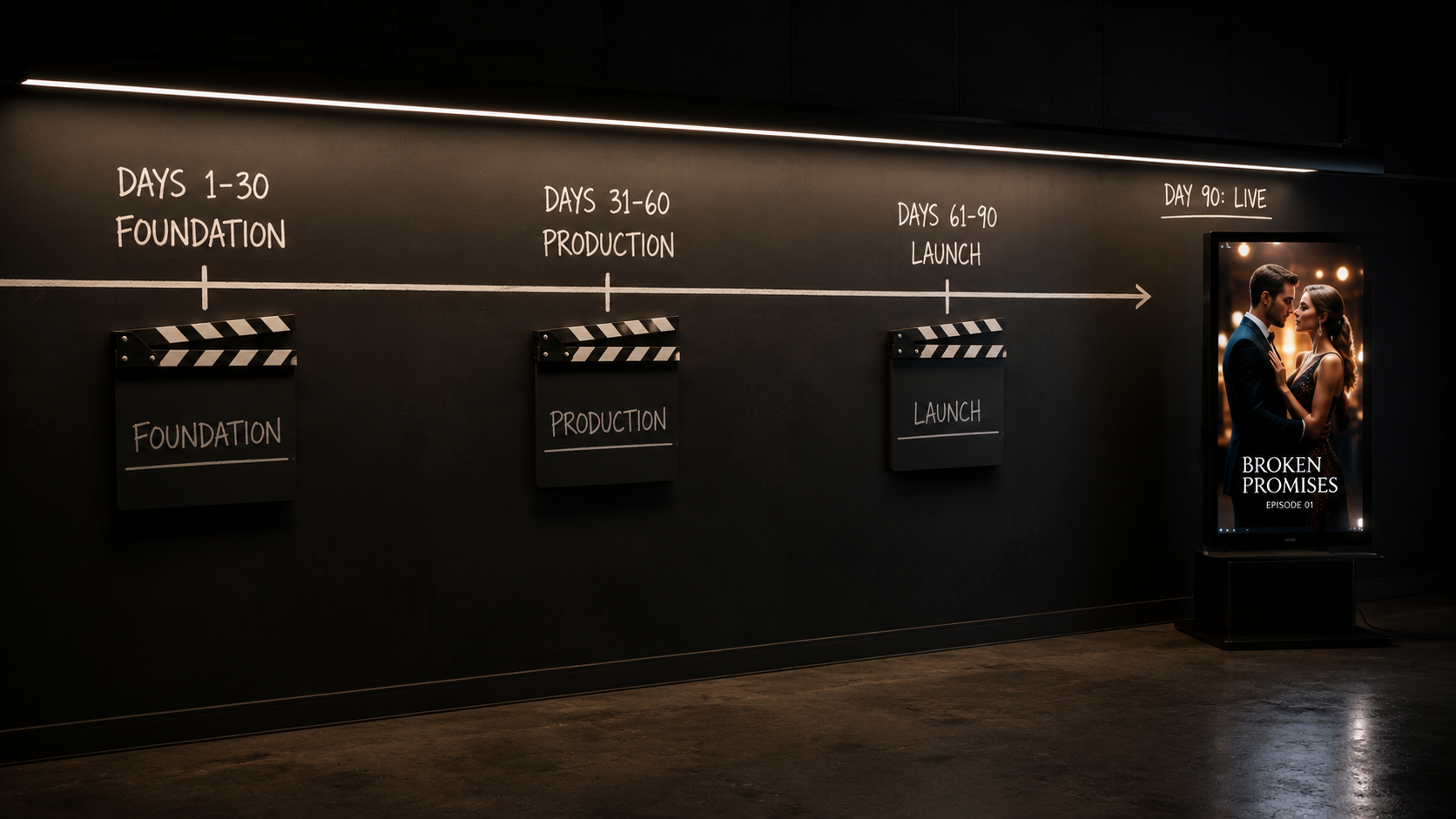
On production infrastructure: the same team locks three characters, eight locations, and one style frame in week one. The AI Director agent runs episode generation against the locked graph while operators supervise. Velocity climbs as the beat templates mature: by mid season the studio is producing episodes in single day cycles and green lighting a second series that reuses two locked characters as crossover leads. The infrastructure did not just make the season cheaper. It made the second season a fraction of the first, which is the compounding that tool stacks structurally cannot deliver.
The Organizational Shift Infrastructure Enables
Infrastructure also changes who can do the work. On tool stacks, production knowledge lives in individual prompt craft, making studios dependent on a handful of power users. On a persistent production graph, knowledge lives in the graph itself: locked characters, encoded beat maps, genre templates. New hires become productive in days because they inherit the studio's accumulated production state rather than reverse engineering a prompt folder. This is how the Studio of 5 model becomes real: a five person team producing at former agency scale, because the infrastructure carries the institutional memory that used to require departments.
The strategic conclusion for 2026 is uncomfortable but simple. AI video tools are getting better at a pace no studio can differentiate on, because every competitor has access to the same tools. Infrastructure is different: locked assets, encoded pacing knowledge, and compounding production state are proprietary by nature. Tools are rented advantages. Infrastructure is an owned one.
The 2026 Buying Checklist
For teams making the infrastructure decision this quarter, here is the condensed evaluation checklist drawn from everything above. Verify persistent character lock by producing shots a week apart with different operators. Verify slate reuse by placing one locked character into a second series without rebuild. Verify orchestration by having one operator run a complete episode end to end. Verify the publish pipeline by exporting directly to your target platform's vertical spec. Verify economics by comparing your current cost per published episode against a Pilot Day benchmark on your own content. And verify ownership by confirming that locked assets, templates, and produced episodes belong to the studio outright. Any platform that passes all six is infrastructure by the definition that matters: it makes your microdrama production compound. Anything that fails two or more is a tool wearing infrastructure marketing, and in a market growing past 11 billion dollars in 2026, the difference will show up in your slate before it shows up in your invoices.
Frequently Asked Questions
What is the difference between an AI video tool and production infrastructure?
A tool generates individual outputs inside temporary sessions. Infrastructure maintains persistent characters, world assets, and orchestration so that every new episode builds on locked, reusable production state.
Do studios need infrastructure for short content?
Yes, once content becomes serialized. Single clips work fine on tools. Series with recurring characters across dozens of episodes require persistent character lock to stay consistent and economical.
What should a studio evaluate first?
Character persistence across sessions. It is the hardest capability to retrofit and the single biggest driver of same day production economics.