Microdrama production cost in 2026 ranges from roughly 100,000 to 300,000 dollars for a traditionally shot 60 episode vertical drama season, while AI native production on persistent infrastructure can deliver a comparable season for a fraction of that, with agentic AI workflows cutting costs by up to 80 percent. This post breaks down where the money goes in both models and why same day episode production changes the unit economics of the entire format.
The Traditional Vertical Drama Budget
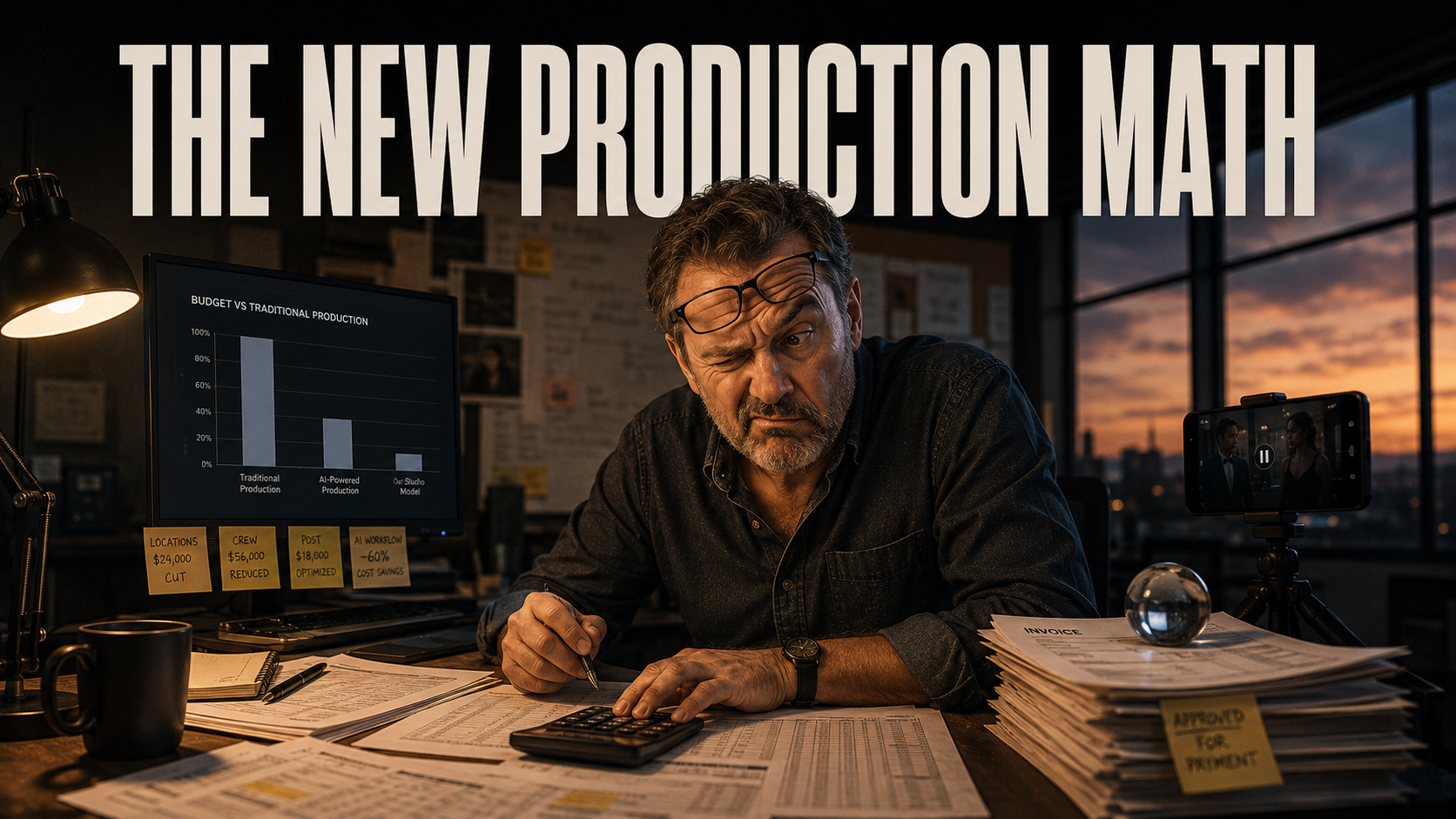
A conventional live shot microdrama season, roughly 60 to 80 episodes at 60 to 90 seconds each, typically budgets 100,000 to 300,000 dollars. The spend concentrates in cast and crew day rates, locations, wardrobe and continuity management, and an editing pipeline compressed into brutal two week shooting schedules. In China, conventional web dramas cost several million yuan while AI assisted microdramas are being made for one to two million yuan, and that gap is exactly why platforms are shifting bets toward AI native slates.
The AI Native Cost Structure
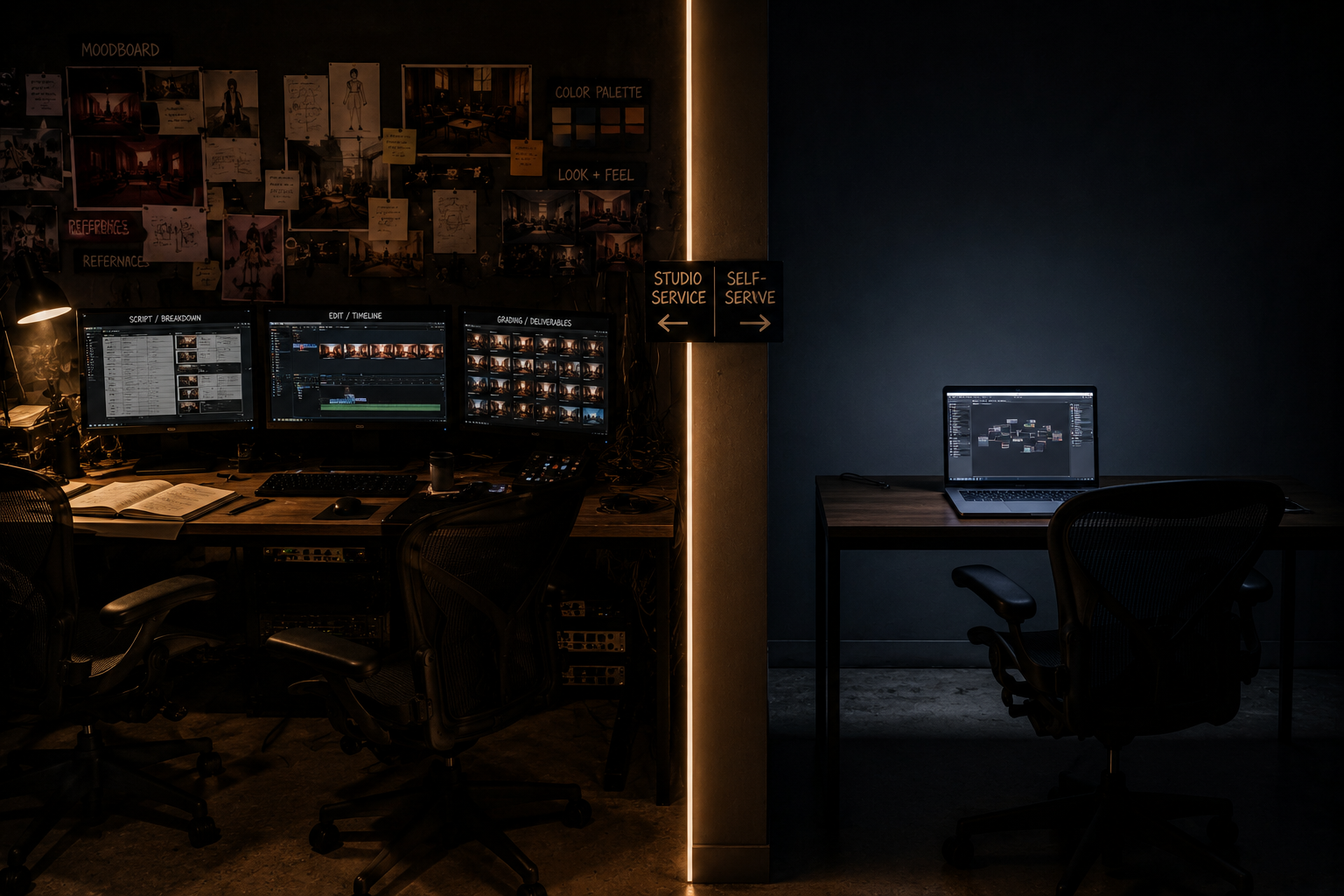
AI native microdrama production replaces day rates with compute and orchestration. The cost drivers become model generation credits, the operator hours supervising production, and post work. Here is the critical nuance most cost comparisons miss: on session based tools, operator hours balloon because of continuity rebuilding, often one to three hours per session before usable output. On persistent infrastructure with locked characters, those hours largely disappear. The same generation budget produces materially more finished episodes because none of it is spent re proving yesterday's characters.
Our own benchmark at MinionArts: Queen of Dragons, a 200 minute vertical animated series, completed in roughly two days of production on Vertex. At traditional timelines, 200 minutes of animated serialized content is a multi month, six figure engagement. The compression comes from infrastructure, not from any single model being fast.
Cost per Episode: The Metric That Matters
Season level budgets hide the number platforms actually care about: cost per published episode, and behind it, cost per tested hypothesis. Vertical drama monetizes on a hook to pay model where most revenue concentrates in a minority of breakout titles. Production companies like Vigloo report producing shows in one month instead of three at one fifth the previous cost by moving roughly 30 percent of budget into AI workflows. Cheaper, faster episodes mean more bets, and more bets mean more chances at the breakout that pays for the slate. The studio math stops being how much does a season cost and becomes how many seasons can we test per quarter.
Where Studios Still Overspend
Three common leaks. First, paying the continuity tax on session based tools and calling it production time. Second, treating every series as a cold start instead of reusing locked characters, world assets, and genre beat templates across a slate. Third, manual export and formatting work that should be an automated 9:16 publish pipeline. Each leak is invisible on a single episode and enormous across a 2026 content calendar.
A Line Item Comparison
Here is how the same 60 episode season budget decomposes across the two production models, based on published industry figures and our own production data at MinionArts.
Traditional live shot season, 100,000 to 300,000 dollars: cast and crew day rates typically consume 40 to 55 percent, locations and art department 15 to 20 percent, equipment and studio 10 to 15 percent, editorial and post 15 to 20 percent, with continuity management salaried invisibly across all of it. The schedule is the hidden constraint: compressed two week shoots mean overtime economics and no capacity for mid season pivots when retention data suggests a story change.
AI native season on persistent infrastructure: generation compute typically lands at 10 to 20 percent of a traditional budget's total, operator supervision at 15 to 25 percent, and world building plus voice and sound at 10 to 15 percent, for an all in cost commonly 60 to 80 percent below the live shot equivalent. Two line items disappear outright: location spend and physical continuity management. One line item appears: infrastructure, which amortizes across every series on the slate rather than billing per season.
The mid season pivot deserves its own mention. Because AI native episodes are produced in same day cycles close to release, studios can read retention data on episodes one through twenty and adjust the story for episodes twenty one onward. Traditional seasons are fully shot before the first retention number exists. In a format engineered around hook to pay conversion, the ability to steer mid season is worth more than most line item savings.
Budgeting for a 2026 Slate
For studios planning slates rather than single seasons, the budgeting question inverts. Instead of asking what one season costs, price the slate as a portfolio: how many series can be tested per quarter, what does each incremental test cost once shared infrastructure and locked assets exist, and what is the expected value of one breakout across the portfolio. On infrastructure economics, incremental series cost falls sharply after the first, because characters, genre templates, and pipelines are already built. This portfolio math, not per season savings, is why platforms and studios in China moved nearly half of top charting production onto AI pipelines within a single year, and it is the math Western studios will be running against for the rest of 2026.
The Numbers Studios Should Track Weekly
Cost structures only improve when they are instrumented, so close with the dashboard we recommend microdrama studios run weekly. Cost per published episode, all in, including operator time. Generation efficiency, meaning the share of generated seconds that ship, where identity retakes are the number to drive toward zero. Episode cycle time from locked script to publish, with same day as the steady state target. Asset reuse rate across the slate, because rising reuse is compounding infrastructure value made visible. And revenue per episode against the platform's hook to pay funnel, since production speed exists to serve retention driven iteration, not to win a speed contest. Studios tracking these five numbers can see within a month whether their production system is compounding or resetting, and in the 2026 microdrama economy, that visibility is the difference between running a portfolio and running on hope.
Frequently Asked Questions
How much does it cost to produce a microdrama in 2026?
Traditional live shot seasons run 100,000 to 300,000 dollars for 60 episodes. AI native production on persistent infrastructure can cut total cost by up to 80 percent, with the largest savings in crew time and continuity management.
What is the biggest cost driver in AI microdrama production?
Operator hours, not generation credits. Session rebuilding and drift correction consume the most budget on tool based stacks, which is why infrastructure with character lock changes the economics.
Is AI microdrama production cheaper per episode?
Yes, materially. Cost per episode drops enough that studios shift from betting one season per quarter to testing multiple series in parallel, which matters in a hits driven market.