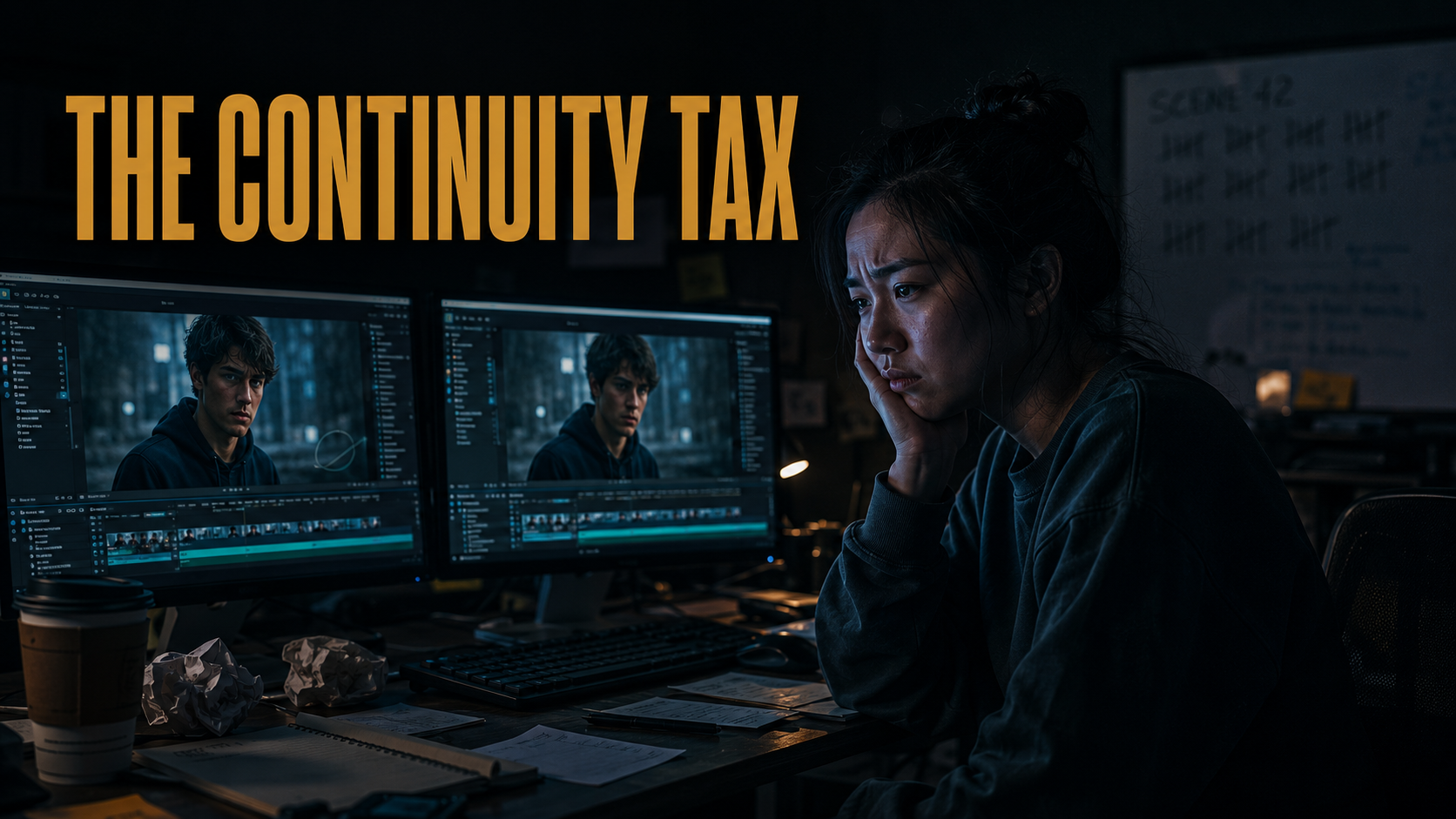
The hidden cost of session based AI video generators is continuity debt: the compounding hours studios spend re establishing characters, sets, and style every time a session resets. In 2026, most popular AI video generators still treat each session as a blank slate. For one off clips this is invisible. For serialized microdrama production, it quietly consumes 30 to 50 percent of total production time and makes true same day episode delivery impossible.
What Session Based Actually Means
A session based AI video generator holds context only while you are working. Your character references, style choices, and scene logic exist inside that session's memory. Close it, hit a context limit, or hand the project to a teammate, and the accumulated production state is gone. The next session begins with re uploading references, re writing prompts, and re testing until the output matches what you had yesterday.
Tool vendors rarely present this as a cost because for their core users, it is not one. A creator making a single social clip never feels it. A microdrama studio producing a 70 episode season feels it 70 times.
The Continuity Tax, Quantified
Consider a standard vertical drama season: 60 episodes, 90 seconds each, roughly 30 shots per episode, 1,800 shots total, with three recurring lead characters. On session based tooling, every production session begins with a re lock ritual: reload references, regenerate test frames, visually compare against previous episodes, adjust prompts, repeat. Studios we work with at MinionArts report this ritual consumes one to three hours per session before a single usable shot is produced. Across a 60 episode season produced over 40 to 60 working sessions, that is 60 to 180 hours of pure continuity tax. At agency rates, the tax alone can exceed the entire AI generation budget.
Then there is drift. Even with careful re prompting, faces shift subtly between sessions. Audiences notice. Vertical drama viewers are ruthless: retention drops when the lead in episode 41 does not quite match episode 40, and in a hook to pay monetization model, retention is revenue.
Why This Breaks Same Day Production
Same day microdrama production only works when generation can start immediately against locked assets. If the first two hours of every day are spent rebuilding yesterday's context, the 24 hour pipeline becomes a 30 hour pipeline, which means it is not a same day pipeline at all. This is the architectural reason speed claims from session based tools do not translate into series velocity. Fast clips do not equal fast seasons.
The Alternative: Persistent Production State
The fix is architectural, not procedural. A persistent node based production graph, the approach we build on Vertex, stores every character, location, and style rule as a locked node that outlives any session. Shot 1,800 references the same character node as shot 1. New team members inherit the full production state instead of a folder of prompts. Regeneration happens against locked identity, so takes can fail without drifting. The continuity tax drops to near zero because continuity is a property of the system rather than an act of memory.
The Costs Nobody Puts on the Invoice
Beyond the measurable hours, session based architecture imposes three costs that never appear in tooling budgets but decide studio outcomes.
Key person risk. When consistency depends on prompt craft, the studio's real production system lives in one or two people's heads. Their vacation is a production outage. Their resignation is a partial reset of the studio's capability. Persistent infrastructure converts this personal knowledge into organizational assets that survive any staffing change.
Revision paralysis. Platforms and brand clients request changes: a wardrobe tweak, a reshot scene, a new ending for a market test. On session based tools, revisiting episode 23 six weeks later means rebuilding episode 23's entire context first, so studios quietly start declining revisions or absorbing losses on them. On a locked graph, episode 23's state still exists exactly as it shipped, and the revision is a same day job.
Slate ceiling. The continuity tax scales linearly with concurrent series. A studio running one show pays it once per session. A studio running five shows pays it five times, which is why tool based studios plateau at one or two concurrent productions regardless of headcount. In a market where China's platforms are adding tens of thousands of AI native titles monthly and betting breadth over depth, a slate ceiling is a growth ceiling.
Migrating Off Session Based Production
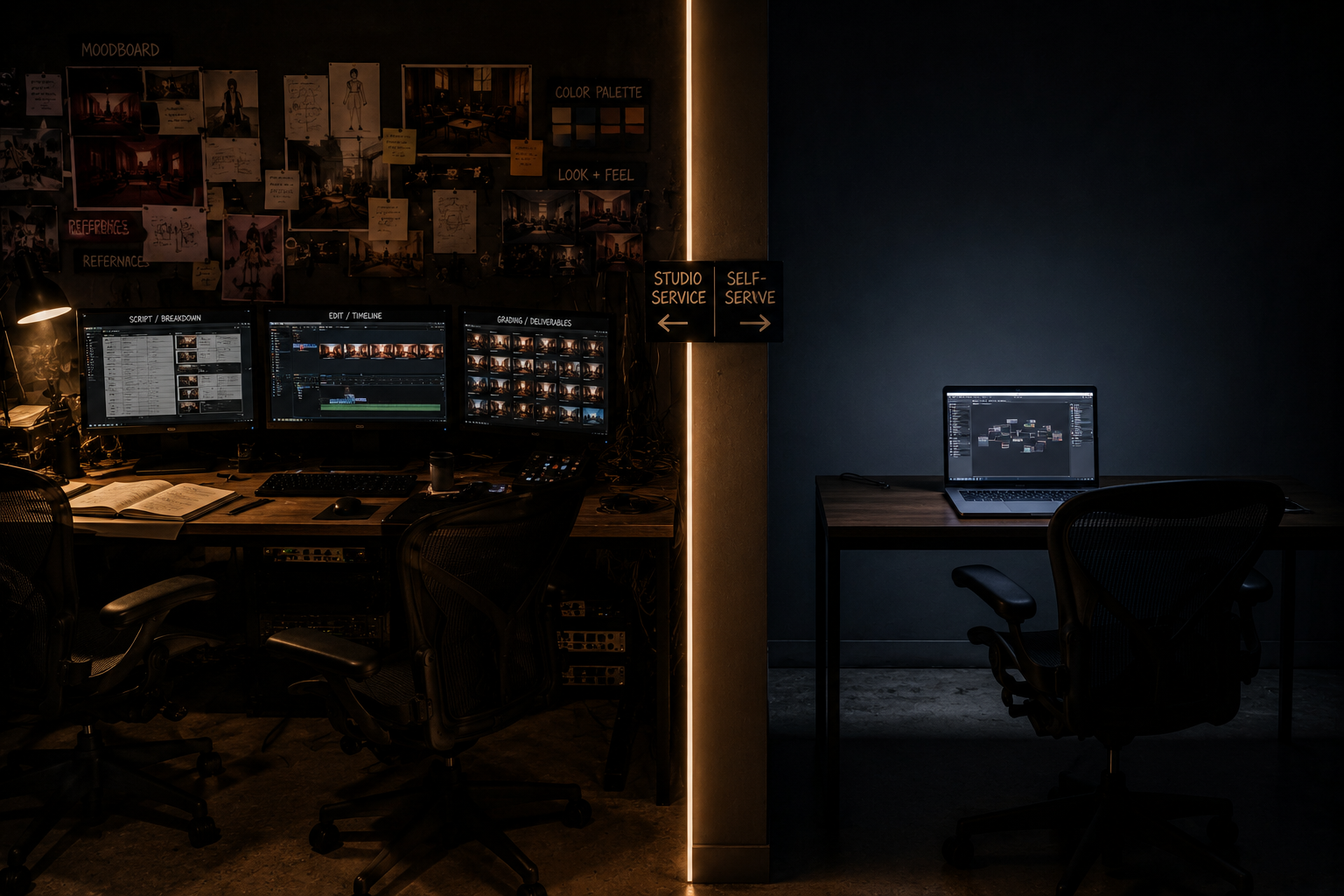
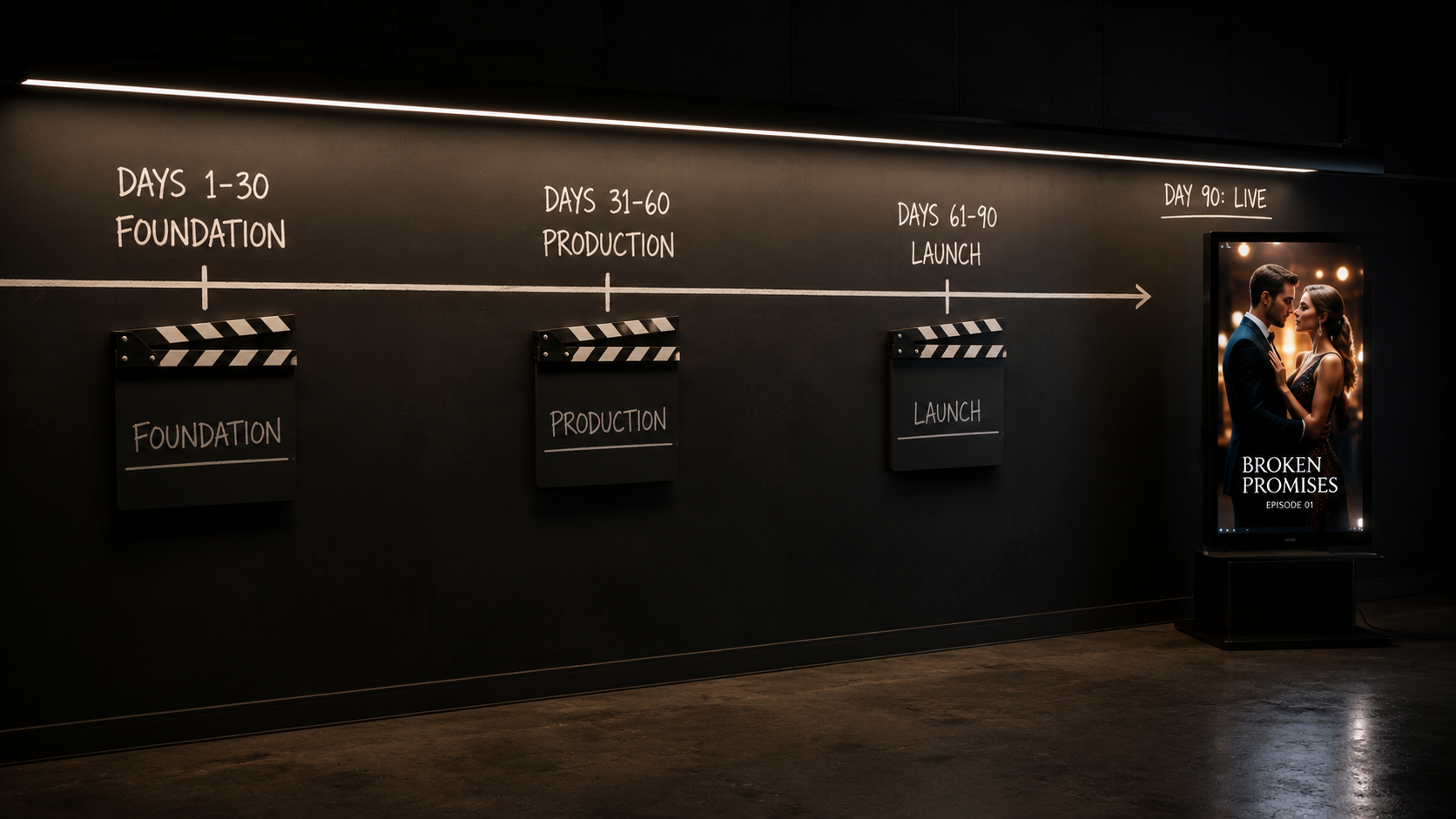
Studios do not need to abandon existing tools overnight. The pragmatic migration is asset first: recreate and lock your recurring characters, locations, and style rules on persistent infrastructure, then route new episode production through the locked graph while legacy tools handle one off assets. Most studios find the migration pays for itself within the first season, because the eliminated continuity tax exceeds the switching cost. The evaluation is straightforward to run in a single guided Pilot Day: lock a cast in the morning, produce an episode by evening, then return a week later and confirm the second episode starts at full speed with zero rebuild. That week gap is the test session based tools cannot pass.
What Session Based Tools Are Still Right For
None of this means session based AI video generators are bad products. They are excellent at what they were architected for: single assets, one off campaign clips, experiments, and exploration where persistence would be overhead rather than advantage. A studio's marketing team cutting a promo, a writer visualizing a concept, a director exploring looks before world lock, all of these are legitimately session shaped jobs. The failure is not the tools. It is using session architecture for serialized production, which is like renting a different actor every day and asking makeup to make them match. Studios should keep session tools in the kit for session shaped work and move everything serialized, which in a microdrama business is the revenue producing core, onto persistent infrastructure. The budget line to watch is simple: if any money touching recurring characters flows through a tool that forgets them, that line is paying the continuity tax, and in 2026's production economics it is the most expensive tax in the building.
One more framing helps decision makers who do not touch the tools daily. Present the continuity tax as a payroll line: at 60 to 180 lost hours per season, a two season year on session based AI video generators costs the equivalent of hiring a full time producer who produces nothing. No studio would approve that hire on paper. Most are approving it invisibly through architecture, and the invisibility is exactly why serialized production keeps landing over schedule despite excellent tools and talented teams.
Frequently Asked Questions
Why do AI video generators lose character consistency between sessions?
Because context is stored in temporary session memory rather than persistent production assets. When the session ends, the model's working knowledge of your characters ends with it.
Can better prompting fix session drift?
Prompt discipline reduces drift but cannot eliminate it, and it does not remove the setup time. The failure is architectural, so the durable fix is persistent character lock at the infrastructure level.
How much time does continuity debt cost a studio?
Studios producing serialized vertical drama on session based tools commonly lose one to three hours per working session to context rebuilding, which adds up to 60 plus hours across a full season.