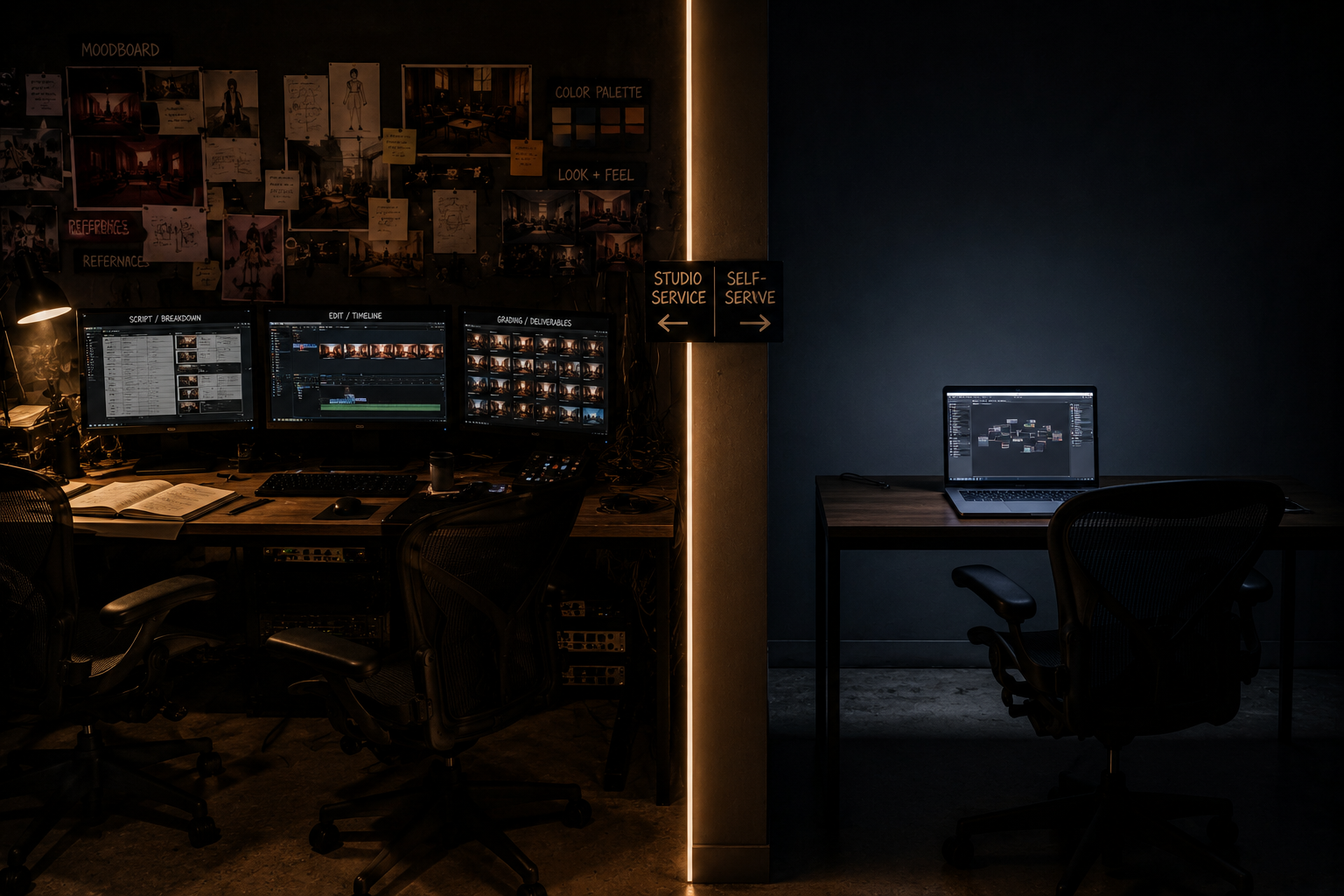
The Category Is Real. The Question Is Which Tool Actually Owns It.
Node-based AI creative canvases are no longer a niche concept. Adobe launched Project Graph. Figma acquired Weavy. Krea shipped Nodes. Freepik has Spaces. FLORA raised $52M and has Netflix and Pentagram on its client roster. The category is moving fast, and the naming conventions are converging on the same visual metaphor: a canvas where AI models connect like nodes in a graph.
MinionArts Vertex launched in this category before most of these announcements. The question for creative teams evaluating both is not which canvas looks better — it is which one is built for the work you actually do.
This comparison is direct. No fluff.
What FLORA Actually Is
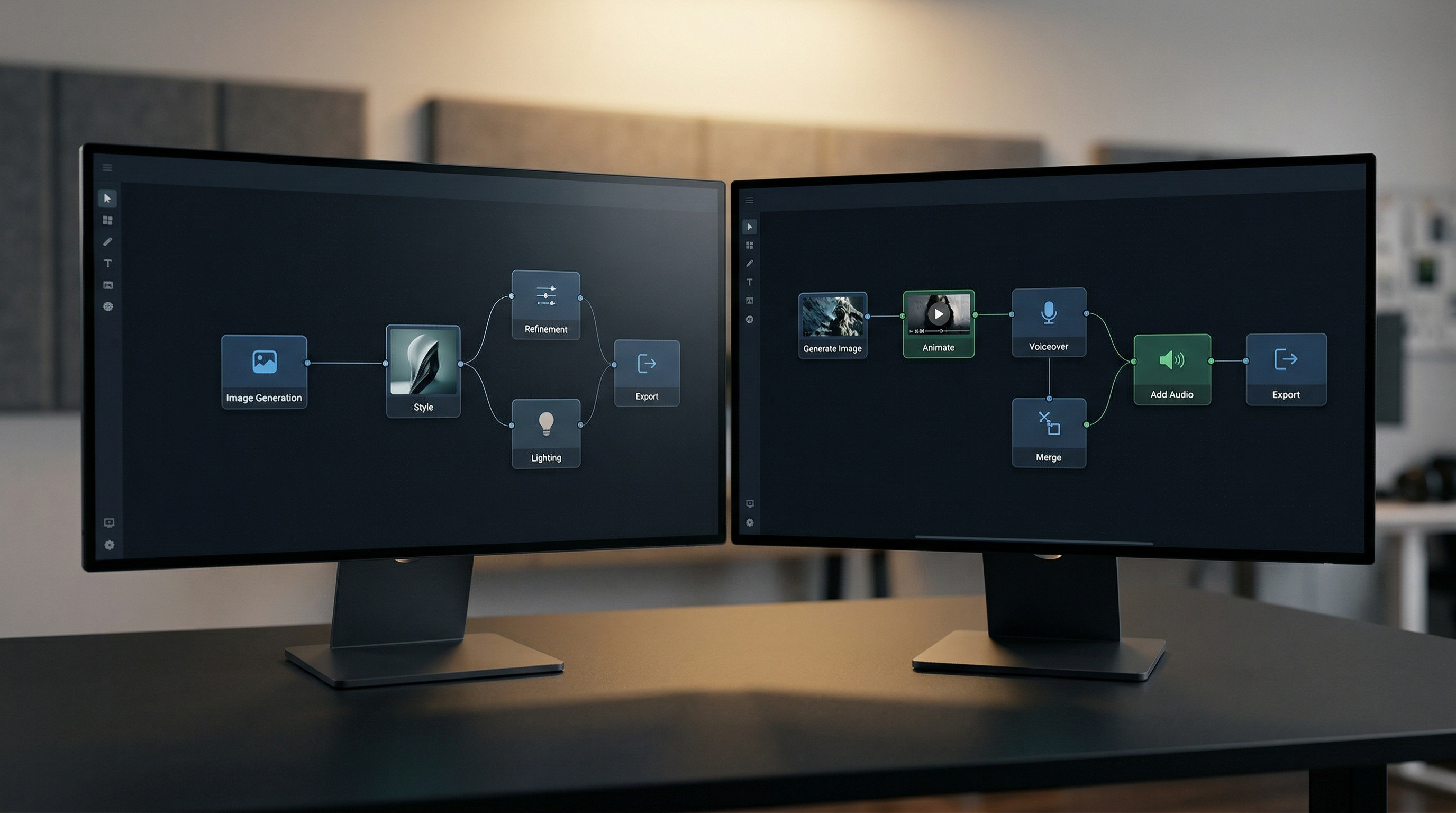
FLORA is a node-based AI canvas built primarily around image and design workflows. It gives users access to 50+ AI models — Stable Diffusion variants, image upscalers, style transfer tools, background removal, and more — connected through a visual graph interface. The workflow logic is genuinely well-designed. Connections between nodes are clean. The UI is polished.
FLORA's client base tells you who it is built for: Netflix (for design asset generation and concept visualization), Pentagram (for brand and identity work). These are image-heavy, design-forward use cases where the primary output is a visual, not a production-ready video ad.
FLORA does have video capability. It is not FLORA's primary design priority.
What MinionArts Vertex Actually Is
Vertex is a node-based workflow canvas built specifically for AI video production. The primary output of a Vertex workflow is not an image — it is a complete campaign asset: an animated product video with voiceover, in multiple formats, ready to deploy.
The model connections inside Vertex are built around a production sequence: image generation (Nano Banana) feeds into video animation (Kling or Veo 3), which feeds into voiceover layering (ElevenLabs), which feeds into format export. The workflow is a production pipeline. The canvas is the interface through which that pipeline is built and run.
Vertex also handles batch production — running the same pipeline across 6, 12, or 50 product SKUs simultaneously. This is not a feature FLORA was built for.
The Head-to-Head Comparison
Model Access
FLORA: Mulriple models with a strong emphasis on image and design tools. Excellent for teams that need access to a wide range of generative image models in one place.
Vertex: Curated multi-model access focused on the production pipeline: Nano Banana, Kling 2.1, Veo 3, ElevenLabs, Seedance. Every model in Vertex serves a specific step in the video production sequence.
Verdict: FLORA and Vertex both have breadth. Vertex wins on production relevance.
Video Production
FLORA: Video capability exists but is secondary. It is not the workflow FLORA was designed around.
Vertex: Video is the primary output type. The entire node architecture — image to video to audio to export — is built around producing complete video assets.
Verdict: Vertex wins decisively.
UGC and Persona Content
FLORA: No built-in persona system or UGC workflow architecture.
Vertex: The Lara Maxxaine, Caleb Tran, and Matt Dorovan persona system is native to the Vertex workflow. A single canvas connects persona image generation, video animation via Kling Elements, and ElevenLabs voiceover in one automated sequence.
Verdict: Vertex wins. FLORA has no equivalent.
Design and Brand Asset Work
FLORA: This is where FLORA genuinely excels. For teams producing brand identity work, concept visualization, print-adjacent digital assets, and design-system-level visual content — FLORA is the stronger tool.
Vertex: Not the right tool for pure design work. Vertex is built for production pipelines, not design systems.
Verdict: FLORA wins for design-forward teams.
Batch Production
FLORA: Batch operations exist but are limited to image generation at scale. No native multi-step batch pipeline.
Vertex: Batch logic nodes are a core part of the Vertex architecture. Running a 12-SKU product campaign through the full pipeline — image, video, audio, export — is a standard workflow.
Verdict: Vertex wins for production volume.
Pricing
FLORA: Enterprise-tier pricing with custom contracts for most serious use cases. The 50+ model access comes with corresponding cost.
Vertex: Credit-based pricing starting at $10/month (1,000 credits). A full 6-scene campaign runs approximately 800–1,000 credits. Transparent and predictable.
Verdict: Vertex wins on cost transparency and accessibility for boutique agencies.
The Right Tool for the Right Team
Choose FLORA if: Your primary deliverables are design assets, brand visuals, or concept images. You need access to a wide range of image models.
Choose Vertex if: Your primary deliverables are video ads, UGC content, animated product campaigns, or voiceover-layered content. You are a boutique performance agency (3–12 people) producing at volume. You need batch production across multiple SKUs or clients and your team works in a design-forward agency with Netflix or Pentagram-style clients.
The Structural Difference
FLORA is a design tool that can generate video. Vertex is a video production platform that starts with an image.
These are not the same thing. The canvas metaphor is shared, the underlying architecture is different, and the output types reflect that difference clearly.
If you are comparing them to decide which one to build your agency's production infrastructure on, the decision comes down to this: what is your primary deliverable? If it is a moving image that runs on paid social and converts — Vertex is the answer.
Why This Comparison Matters in April 2026
FLORA is growing fast. Their $52M funding round means significant investment in marketing, product development, and the kind of press coverage that shapes category narratives. The window to establish Vertex as the video-first alternative in this category is now — before FLORA's broader awareness locks in "node-based AI canvas" as synonymous with design rather than production.
MinionArts is not competing with FLORA for the same clients. But the category framing matters. Vertex owns "video production and media asset creation including designs and images" the way FLORA just owns "design generation" — and the time to publish that distinction is today.
Try Both. Make the Decision on Your Work, Not on Funding Rounds.
FLORA is an excellent tool for what it does. So is Vertex. The question is not which one raised more money or has the more impressive client logo. The question is which one produces the thing your clients are paying you to produce.
For most performance agencies in 2026, that thing is video. And for video, the pipeline starts and ends in Vertex.