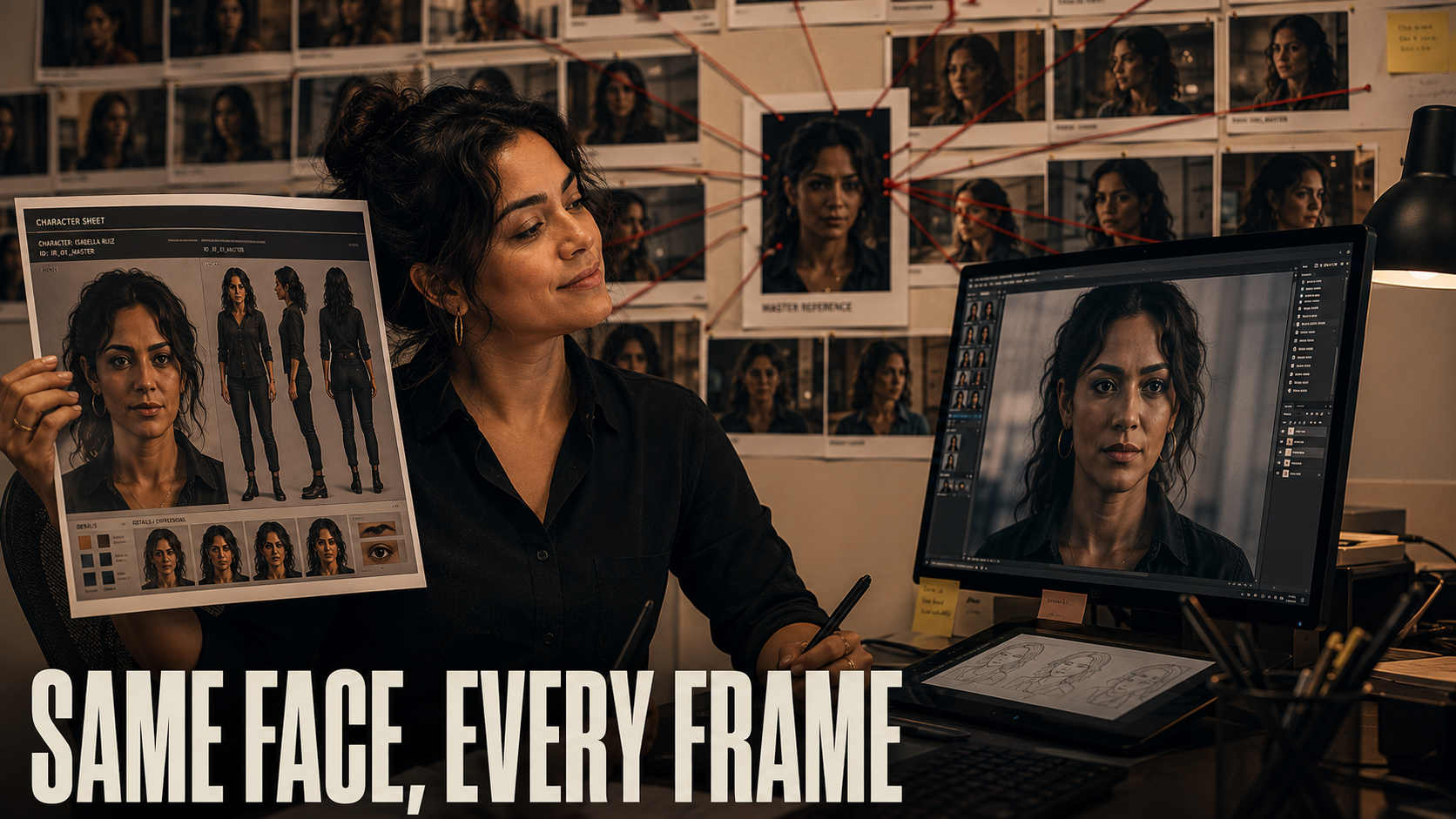
Character consistency in AI video is the ability to keep a character's face, body, wardrobe, voice, and mannerisms identical across every shot, episode, and production session. In 2026 it is the single most important capability in AI film production, because serialized formats like microdrama live or die on whether episode 62 matches episode 1. There are two fundamentally different ways platforms attempt it: session memory and character lock. Only one of them scales to a full season.
Session Memory: Consistency as a Best Effort
Most AI video generators approach character consistency through session memory and reference images. You upload references, the model conditions on them, and within that session, results are often impressive. Leading tools now advertise 95 to 98 percent character consistency within a generation run, and for short content that number is genuinely usable.
The problem is the phrase within a session. Session memory is probabilistic and temporary. It degrades as context grows, it resets when the session ends, and it cannot be shared cleanly across a team. Consistency becomes a skill held by whoever wrote the best prompts, not a property of the production. When a studio produces 1,800 shots over six weeks with three operators, best effort consistency turns into visible drift.
Character Lock: Consistency as Infrastructure
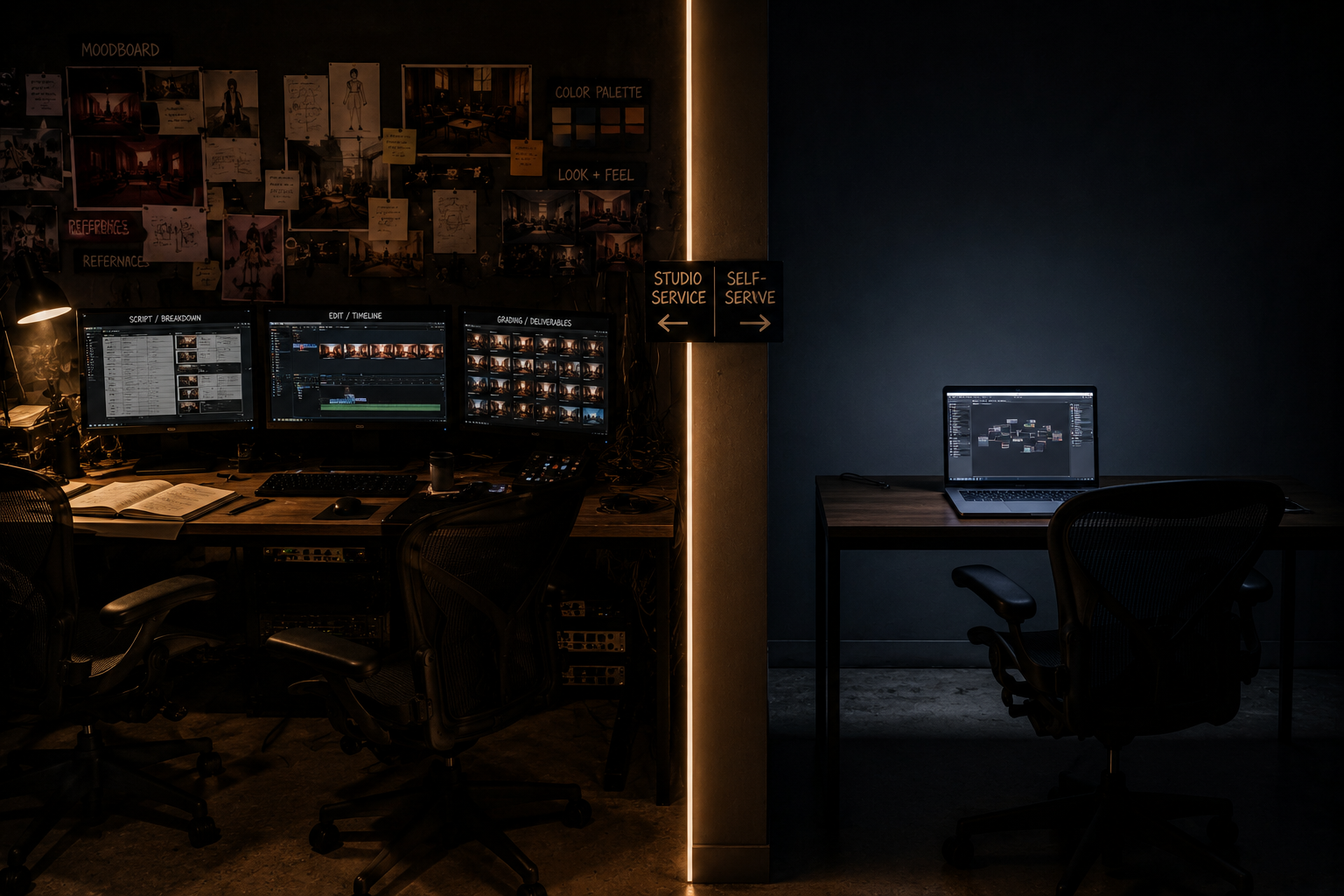
Character lock takes the opposite approach. A character is created once, approved once, and stored as a locked node in a persistent production graph. Every downstream shot references that node directly. The system enforces identity rather than asking the model to remember it. This is the architecture we build at MinionArts with Vertex: a node based persistent graph where locked characters, locations, and style rules survive across sessions, operators, weeks, and entire series.
The practical differences show up fast. Locked characters can be recast into new scenes, new episodes, and even new series without re establishment. Regeneration is safe: a failed take regenerates against the lock instead of drifting from it. Team handoffs carry the full character state. And because nothing needs re proving at the start of a session, generation can begin immediately, which is what makes same day episode production possible.
Why Vertical Drama Makes This Non Negotiable
Vertical drama is a face driven format. Episodes run 60 to 120 seconds, framing is tight, and the camera lives on faces for most of the runtime. Viewers form parasocial attachment to leads within episodes, and the hook to pay model means a viewer who feels something is off in episode 12 simply stops paying. With 40 to 50 percent of top Chinese microdramas now AI generated or AI assisted, audiences are also getting sharper at spotting drift. The tolerance for inconsistency is dropping exactly as production volume is exploding.
How to Evaluate a Platform's Consistency Claim
Ask three questions before trusting any character consistency claim. First, does consistency survive a closed session and a new operator, or only a continuous run? Second, can the same locked character appear in two different series without rebuild? Third, when a shot fails and regenerates, does identity hold automatically or does it depend on the prompt? Session memory answers no to at least one of these. Character lock answers yes to all three.
The Economics of Consistency
Character consistency is usually discussed as a quality issue. For studios, it is primarily an economic one, and the numbers are larger than most teams expect.
Regeneration spend. Every drifted take is generation credits spent producing footage that cannot ship. Studios on session memory stacks routinely report 20 to 40 percent of generation volume going to consistency retakes. On locked infrastructure, retakes still happen for performance and composition reasons, but identity retakes approach zero, which directly recovers a fifth to a third of the compute budget.
Retention revenue. Vertical drama monetizes on a hook to pay model: viewers sample free episodes and pay to continue. Attachment to the lead is the product. Visible drift between episodes breaks the parasocial thread precisely at the moment the paywall asks for money. In a format where the top titles earn the overwhelming majority of revenue, consistency is not polish. It is conversion.
Franchise value. A locked character is a durable asset. It can anchor sequels, spinoffs, and brand partnerships because it can be reproduced exactly, on demand, indefinitely. A session memory character is a recipe that produced someone similar last time. Only one of these is an asset a studio can build IP value on, and as vertical drama attracts brand budgets, from retail media microseries to branded episode integrations, reproducible characters become licensable ones.
Consistency Across a Universe, Not Just a Season
The frontier in 2026 is no longer episode to episode consistency. It is universe level consistency: the same locked character appearing across a flagship series, a prequel, a promotional short, and a brand integration, identical in all of them, produced by different operators months apart. This is trivially natural on a persistent production graph, because all four productions reference the same node. It is effectively impossible on session memory, where each production is a fresh approximation. Studios planning multi series slates for the 11 billion dollar plus 2026 microdrama market should evaluate platforms at universe scale, because that is the scale their IP strategy will actually run at.
Getting to Locked: The Practical Path
For studios ready to move from session memory to character lock, the practical sequence matters. Start with your highest value recurring character, usually the lead of your flagship series, and treat the lock session as a casting decision with the same seriousness: multiple candidates generated, reviewed on the actual shot types the season demands, tight framing, profile, motion, and emotional range, then approved once by the people with creative authority. Lock supporting cast and locations next, then the style frame that governs light and color logic. Budget a day for a full series world and consider it the best day the season will buy, because every subsequent episode inherits it. From that point forward, the operational rule is absolute: no shot ships that was not generated against the lock. Studios that hold that rule report the drift conversation simply disappearing from dailies within the first week, replaced by the conversations a studio should be having, about performance, pacing, and story.
Frequently Asked Questions
What causes character drift in AI generated video?
Drift happens when identity is stored in temporary session context rather than persistent assets. Small variations compound across shots and sessions until the character visibly changes.
Are reference images enough for a full season?
No. Reference images condition individual generations but do not persist production state, enforce identity across regenerations, or transfer cleanly between team members over a 60 plus episode season.
What is character lock in AI film production?
Character lock stores an approved character as a permanent node in a production graph, so every shot in every session references the same enforced identity instead of a remembered one.