Introduction
In 2026 independent boutique creative agencies are winning high profile brand work at a rate unprecedented in the last two decades. The mechanism is AI workflow leverage combined with senior talent density. This analysis covers the structural reasons it is happening, three case studies of boutique agencies taking share, and the specific playbook independent shops use to compete.
What Changed in the Last 18 Months
Three structural shifts converged. AI generation quality crossed the threshold for broadcast use cases. Workflow canvases let non technical creatives orchestrate multi model pipelines. And clients became willing to buy output based deliverables rather than pay for headcount hours. Together these shifts reversed the scale advantage of holding companies.
The Holding Company Disadvantage
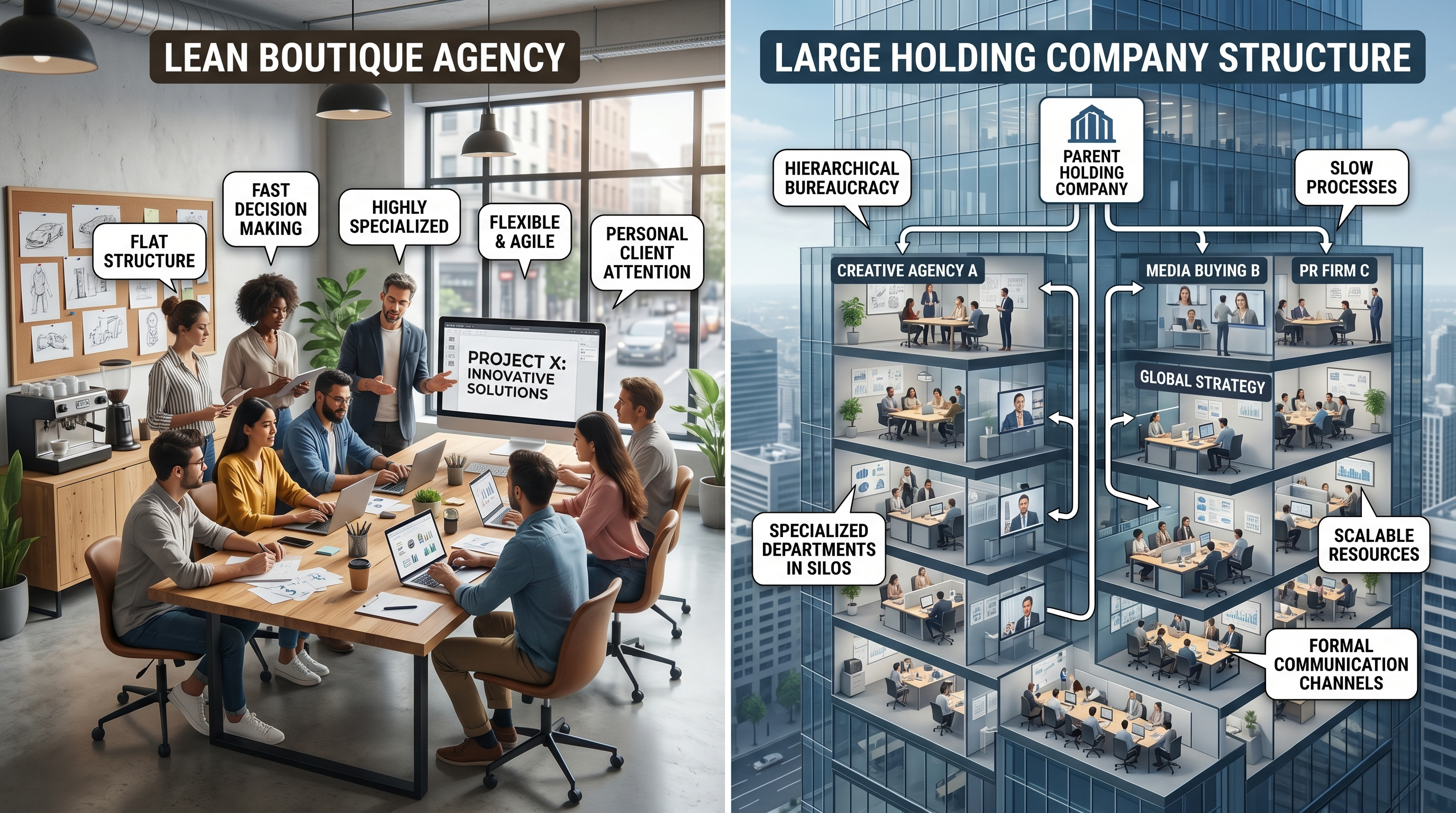
Holding company agencies run on hourly billing, layered account management, and legacy process overhead. An AI workflow that produces a finished asset in 20 minutes cannot be billed at 40 hours of creative team time. The entire revenue model resists AI adoption, and adoption is slow because it cannibalizes billed hours.
The Boutique Advantage
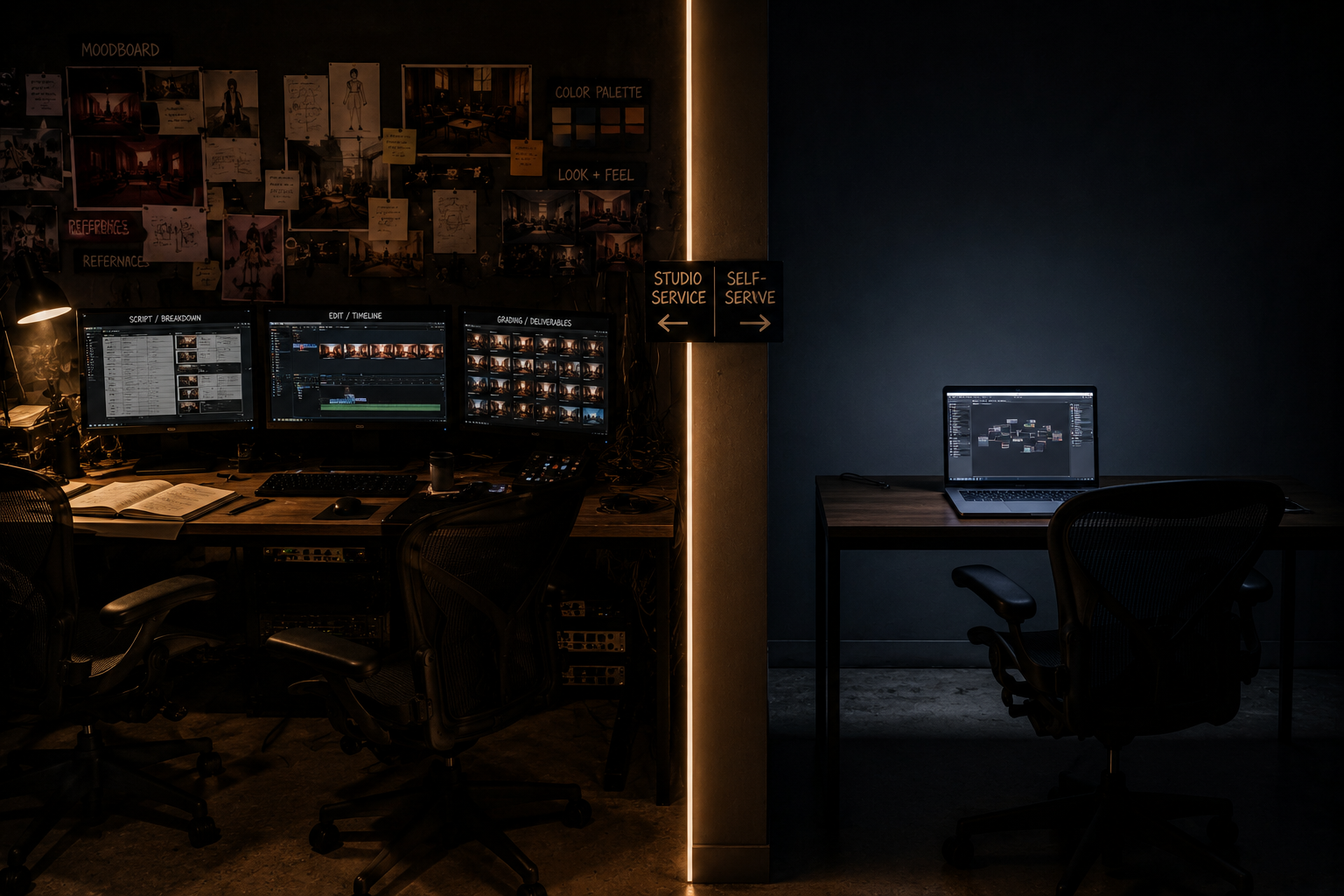
Boutique agencies run lean teams of senior operators who own output end to end. They have no layered account management to protect, no hourly billing to defend, and fast internal decision speed. They can adopt AI workflows aggressively and price on output.
Case Study One: Goodo Studios
A five person boutique producing performance creative for DTC brands. Matthew Gattozzi and team use AI workflows for ideation, keyframe generation, and variation testing, delivering monthly volumes that would require a 20 person team at a holding company. Their client roster includes brands that moved over from agencies 10x their size.
Case Study Two: Easy A Media
An AI native agency producing high output social creative for consumer brands. Spencer Pawliw and team use workflow libraries to produce 500 plus variations per campaign at unit economics holding companies cannot match.
Case Study Three: In House Creative Teams
Increasingly brand in house teams are adopting the boutique model internally, using AI workflows to enhance their existing creatives and reduce reliance on outside agencies by 60 to 80 percent. When in house teams are the competitor holding companies face pressure from two sides.
The Boutique Playbook
The winning boutique playbook has five moves. Hire only senior operators. Build a workflow library that covers 80 percent of client asks. Price on output or retainer not hours. Sell the Studio of 5 narrative explicitly. Publish transparent process content that demystifies AI for cautious clients.
FAQ
Are holding companies going away?
No. Holding companies will consolidate around media buying, data, and measurement where scale still matters. Creative production is the layer that is migrating to boutiques.
What is the minimum team size for this model?
Three to five senior operators is the proven sweet spot. Below three delivery risk is too high. Above seven coordination overhead starts eroding the advantage.
How do boutique agencies find clients?
Direct founder led outbound, referrals from existing clients, and content marketing that demonstrates AI craft. Inbound from search and LinkedIn is increasingly meaningful.