Discover how an AI video production workflow built on chained node pipelines collapses a 3-day post-production cycle into under 90 minutes.
The Old Way Was Expensive. The New AI Video Production Workflow Is Architecture.
Three years ago, producing a single 30-second ad required a shoot day, a colorist, a sound designer, and at minimum a week of editorial. For a boutique brand, that meant $8,000 to $25,000 per asset with limited ability to iterate.
Today, the same output ships in 90 minutes. Not because AI made video "easy" but because a structured AI video production workflow made it repeatable.
This is what MinionArts was built around. Not a one-click generator. A system. Brands and agencies searching for AI post-production automation are no longer looking for faster editors — they are looking for pipelines that do not require editors at all.
What Is a Node-Based Video Workflow?
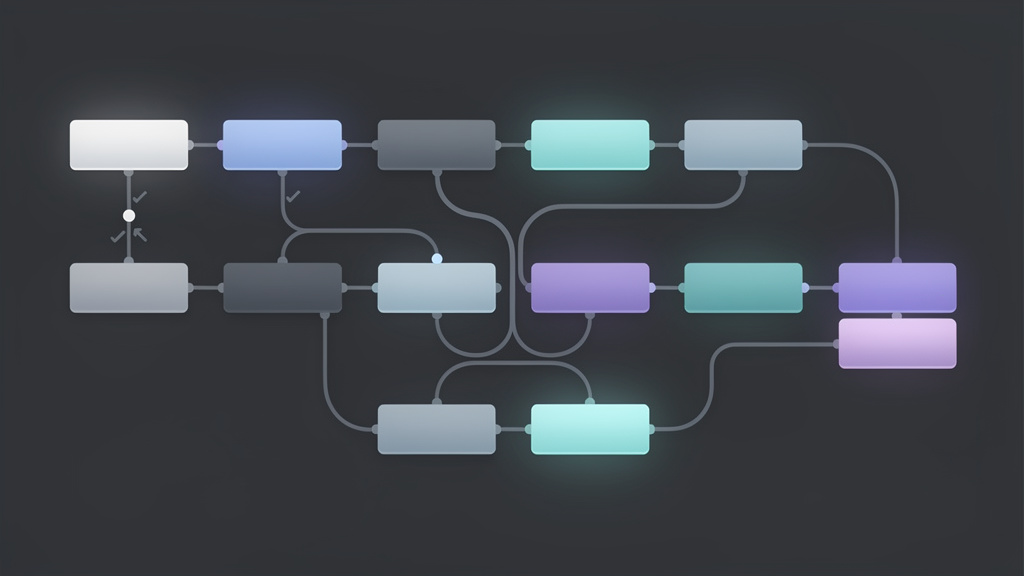
A node-based video workflow is a directed graph of AI operations where each node handles one specific task and passes its output to the next node in the chain. This automated video pipeline architecture is what separates production-grade AI creative tools from simple prompt interfaces.
In a fully-built AI video production workflow, the node sequence looks like this:
- IMAGE_GENERATOR node — Takes a product photo or text prompt and produces a styled visual.
- VIDEO_GENERATOR node — Animates that image using a model like Kling 2.6 Pro or Veo 3.1 Fast with motion directives baked in.
- AUDIO_GENERATOR node — Produces voiceover via ElevenLabs multilingual v2.
- MUSIC_GENERATOR node — Runs in parallel, composing genre-specific music to match the visual tone.
- MERGE node — Combines video and audio tracks into a finished output.
The result is an automated video pipeline that runs deterministically. Every time you trigger it, the same structure fires. The creative variables are in the prompts. The architecture is stable.
Why Reusability Is the Real Unlock in AI Post-Production Automation
What separates a node-based video workflow from prompt-based generation is reusability. AI post-production automation is only valuable at scale when the system can reproduce results without rebuilding from scratch.
A D2C brand running five SKUs across three markets can trigger the same AI video production workflow with different product inputs and receive five regionally adapted videos in the time it used to take to brief a single editor.
Interface Forms extend this further. Non-technical team members access a simplified layer on top of the workflow. They fill in product name, key benefit, and target audience. The nodes handle everything else. This is what modern AI creative workflow tools deliver: leverage without complexity.
The Numbers Behind the Shift
> Traditional 30s ad: 3–7 days, $8K–$25K, 1 variation.
> Vertex AI video production workflow: 60–90 minutes, fraction of cost, unlimited variations on demand.
This is not a marginal improvement. It is a structural change in how creative production is priced and paced.
For performance agencies, AI post-production automation matters enormously. The ability to generate 20 ad variants, test them against each other, and double down on winners within a single week is a capability that simply did not exist in traditional post-production pipelines.
What This Means for Your Production Stack
If you are running a studio, an agency, or an in-house brand team, the question is no longer whether to adopt AI creative workflow tools. It is whether to adopt them as isolated point solutions or as an integrated automated video pipeline system.
Point solutions give you speed on individual tasks. An integrated AI video production workflow gives you leverage across entire production runs.
MinionArts Vertex is built for the latter. Every node-based video workflow you build becomes a reusable asset. Every prompt refinement improves every future run. Every model upgrade benefits every pipeline it is part of.
Getting Started With Your First AI Video Production Workflow
The fastest path to understanding node-based video production is to run one. Pick your simplest content format — a product reel, a talking head, a testimonial overlay — and map out the five to seven operations it requires. Build those as nodes on Vertex.
You will immediately see where the leverage is. Once you see it, one-off generation starts to feel like leaving money on the table.
MinionArts is where production-serious creators build their AI video production workflows. Start with one pipeline. Scale from there.