The barrier to starting an AI-native microdrama studio is now a small production team and a working pipeline, not a studio lot or a broadcast deal. That is the entire premise behind this category being accessible to independent teams in a way traditional TV production never was.
The Team You Actually Need
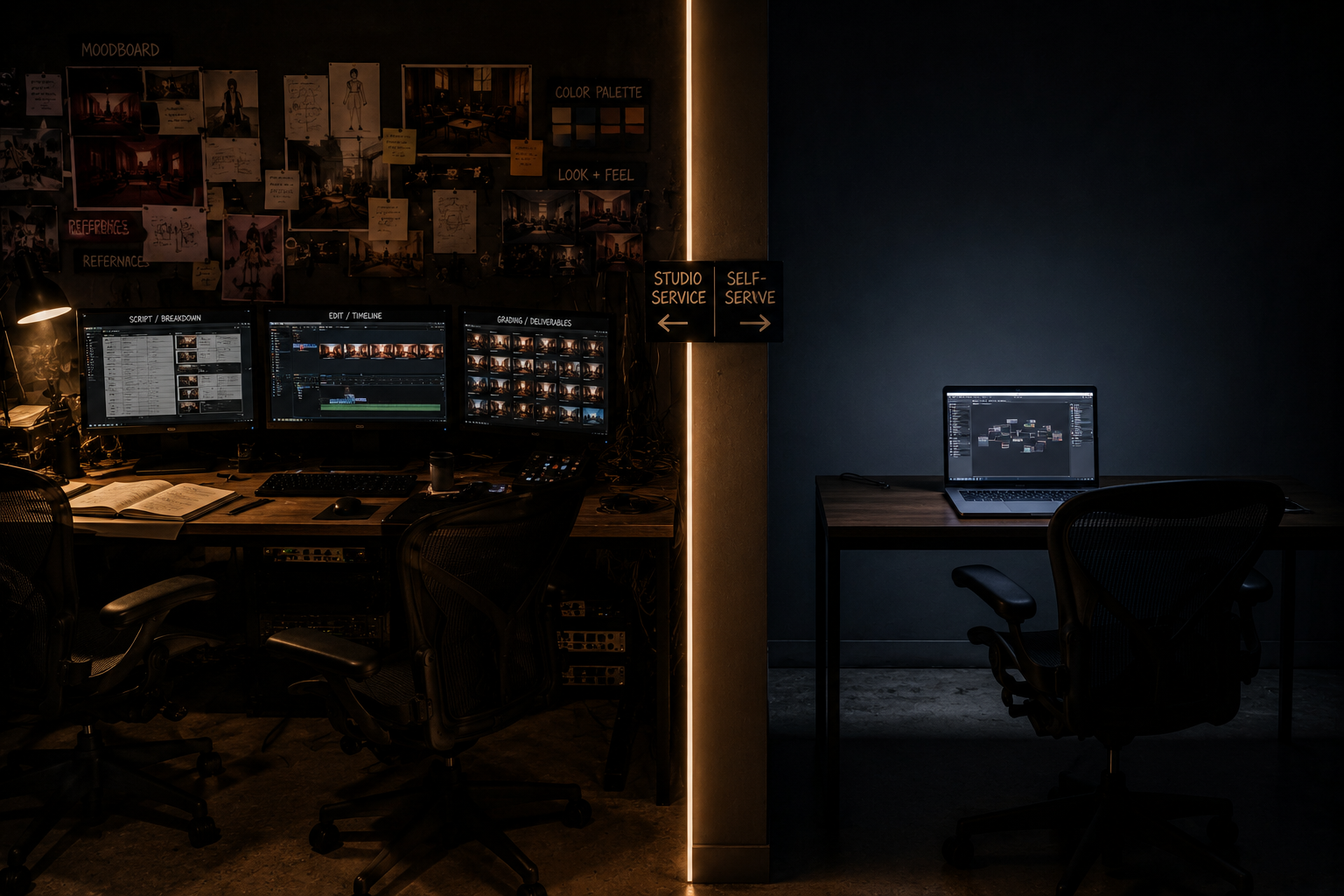
A functioning AI-native microdrama studio can realistically run with a small core team:
A writer or creative lead who understands genre formula, cliffhanger pacing, and episode-length storytelling.
A production operator who runs the AI generation pipeline, manages character consistency, and handles shot-by-shot execution.
An editor or post-production generalist who assembles episodes, handles sound design, and manages voice work.
Three people covering these roles, sometimes fewer with the right tooling, is enough to produce a real pilot and begin pitching platforms. This is a fundamentally different starting point than traditional TV production, which requires a crew, a location, and a much larger upfront commitment before a single frame is shot.
The Tooling Stack
Beyond people, a studio needs a production pipeline that can generate consistent characters across scenes, route different shot types to the right underlying AI models, handle voice generation in the target language, and assemble finished episodes. Cobbling this together from disconnected point tools is where most new studios lose time and money, since manually maintaining character consistency across a dozen separate tool outputs is slow and error-prone.
Where the Real Money Should Go First
The temptation for a new studio is to spend early money on marketing or a polished website. Resist that. The first real investment should go into producing one genuinely strong pilot episode, because that pilot is the actual pitch document platforms respond to. A rough concept with a beautiful landing page will not get a commissioning conversation started. A tight, well-produced pilot will.
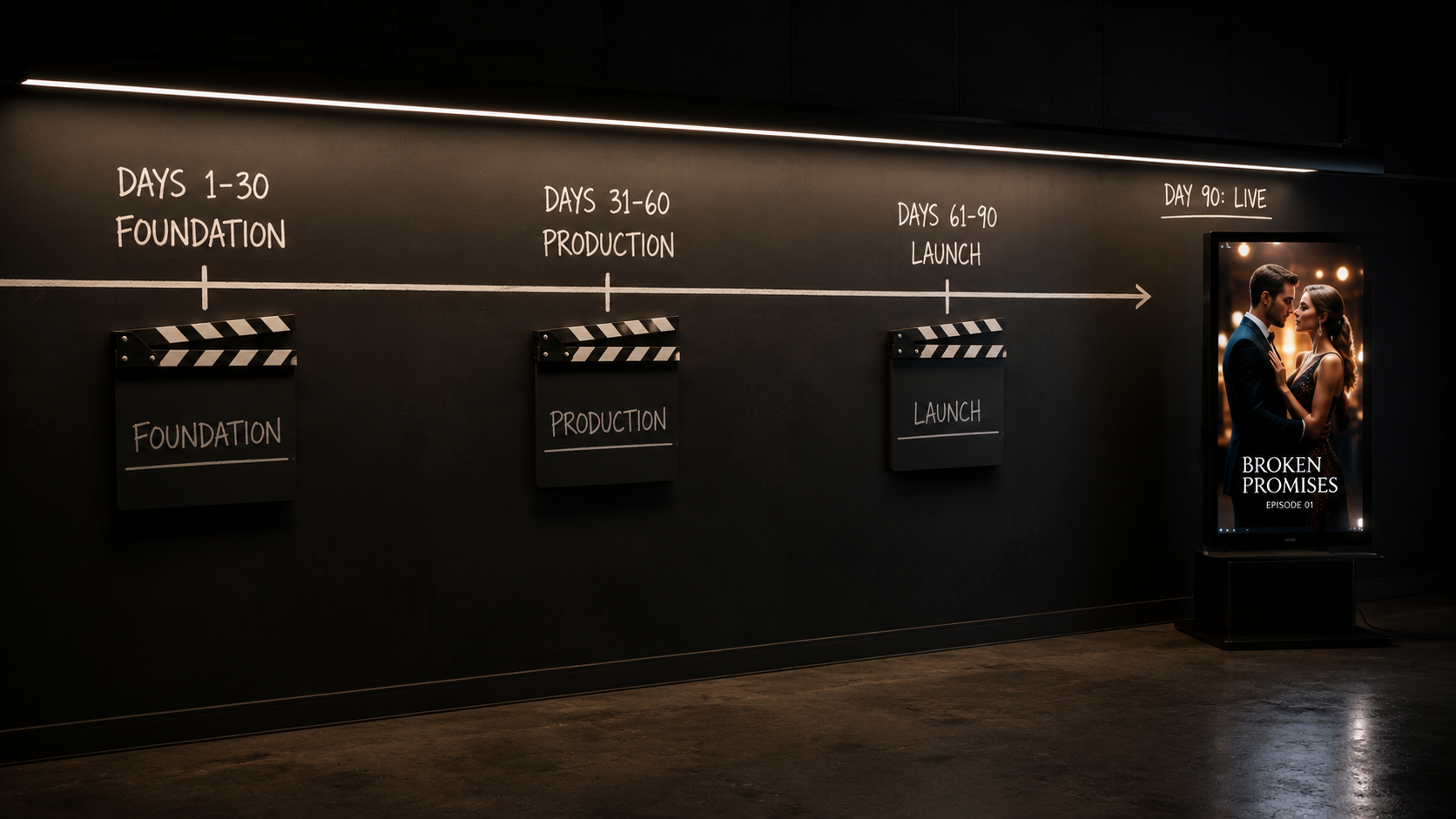
A Realistic First 90 Days
Weeks 1 to 2: Lock a genre, a concept, and a script for a single pilot episode built around a proven microdrama formula.
Weeks 3 to 6: Build character designs and lock consistency across the full pilot using a proper production pipeline.
Weeks 7 to 10: Complete production, sound design, and voice work, then run internal review passes.
Weeks 11 to 13: Begin platform outreach with the finished pilot and a production capability summary.
This timeline is aggressive by traditional production standards and realistic by AI-native production standards, which is precisely the advantage a new studio is trying to capture.
Funding the First 90 Days
Most new microdrama studios self-fund the first pilot rather than raising money upfront, and there is a good reason for that: investors and even platform commissioning teams want to see evidence of production capability before committing capital, which means the pilot itself functions as your proof of concept for any future funding conversation, not just for platform pitches.
Realistically budgeting for this stage means separating fixed costs, tooling subscriptions, compute, any contractor fees for voice work or specialized skills, from time costs, the founders' own unpaid hours during the build. Many first-time studio founders underestimate how much of the real cost in this stage is time rather than cash, since a small team iterating on character consistency and pacing across a first pilot will spend far more hours than a simple budget line item suggests. Planning for that time investment honestly, rather than assuming the AI production advantage means everything happens instantly, sets more realistic expectations for the first quarter.
How to Produce This With MinionArts Vertex
Vertex is built specifically to let a small team punch above its size. The node-based canvas handles character consistency, multi-model routing, and shot assembly in one connected pipeline, which is the difference between a three-person team producing a pilot in weeks versus months of fragmented tool-switching.
Frequently Asked Questions
How many people do I really need to start?
A functional studio can start with as few as two or three people covering writing, production, and post, provided the production pipeline itself handles character consistency and model routing rather than requiring manual work across disconnected tools.
Should I build a full first season before pitching platforms?
No. A single strong pilot episode is generally more valuable for outreach than a partially finished season, since it proves quality and consistency without overcommitting resources before you have platform interest.
What is the biggest cost mistake new studios make?
Spending early budget on marketing or branding before proving production capability with a real pilot. Platforms respond to demonstrated production quality, not polished pitch materials.
Build Your Next Microdrama With MinionArts
None of the economics in this piece matter if you cannot ship episodes at the speed and cost the format demands. That is the problem MinionArts Vertex was built to solve. Vertex is a node-based production OS that locks character consistency across scenes, routes shots to the right model automatically, and takes a script from concept to publish-ready episode in days instead of weeks. If you are serious about building a microdrama studio, start your next project on Vertex and see what a real production pipeline feels like. Start building on Vertex or talk to our team about your first series.