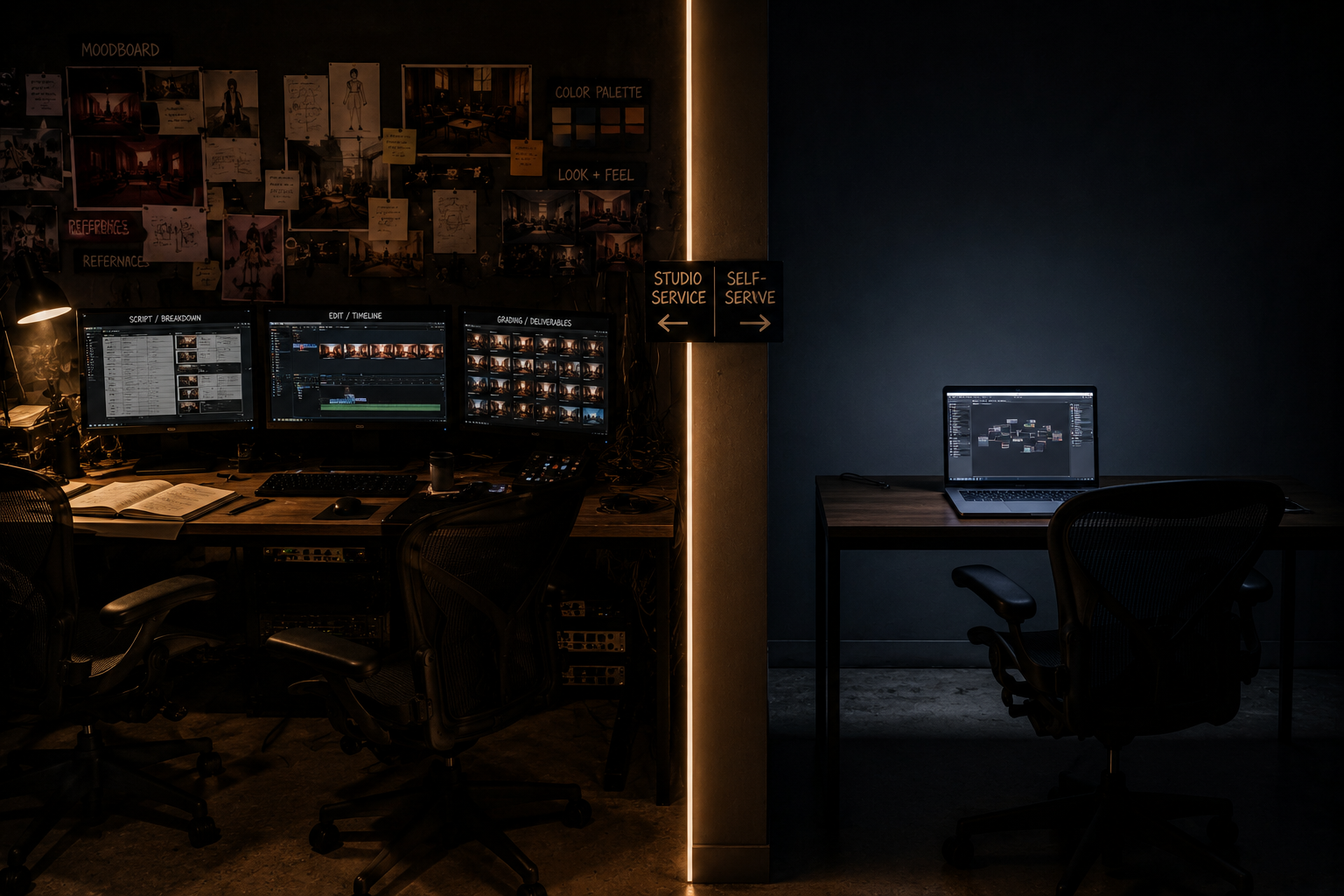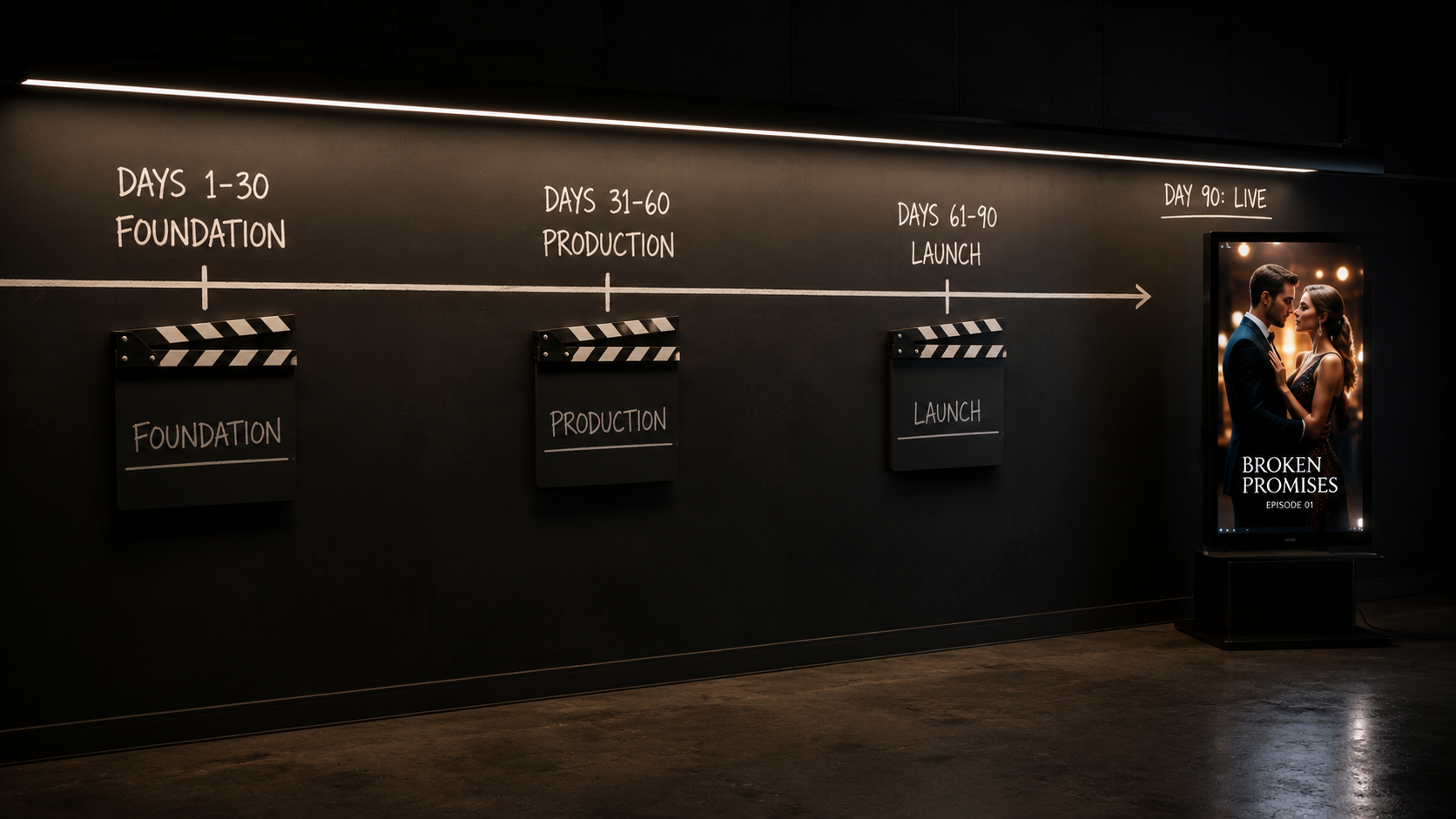
AI filmmaking is a production approach in which generative video models, AI storyboarding tools, and node-based workflow pipelines replace traditional crew infrastructure. As of 2026, a team of five can produce cinematic short films and brand content that would have required a 30-person agency two years ago.
The Production Floor Has Changed
For most of cinema history, scale was gated by headcount. Feature films required departments. Ad films required production houses. Even a 30-second TVC came with a director, a DOP, a gaffer, a producer, and a post team of ten. That infrastructure existed because no single person or small group could manage every discipline at once.
AI filmmaking tools are dismantling that model faster than anyone predicted. This is not a theoretical future state. It is happening right now across studios, agencies, and independent creator operations worldwide.
What Changed and When
The inflection point came in late 2024 and accelerated through 2025. A combination of factors converged: video generation models crossed the quality threshold where output was usable without extensive cleanup, multimodal input pipelines made it possible to feed reference images, voice, and script into a single generation pass, and node-based workflow tools made it possible to chain these operations into repeatable, scalable pipelines.
By early 2026, models like Kling 3.0, Seedance 2.0, and Veo 3.1 were producing 10 to 15 second clips with 4K output, synchronized audio, and consistent characters across multi-shot sequences. These are not demo outputs. These are production assets.
What AI Filmmaking Actually Looks Like in Practice
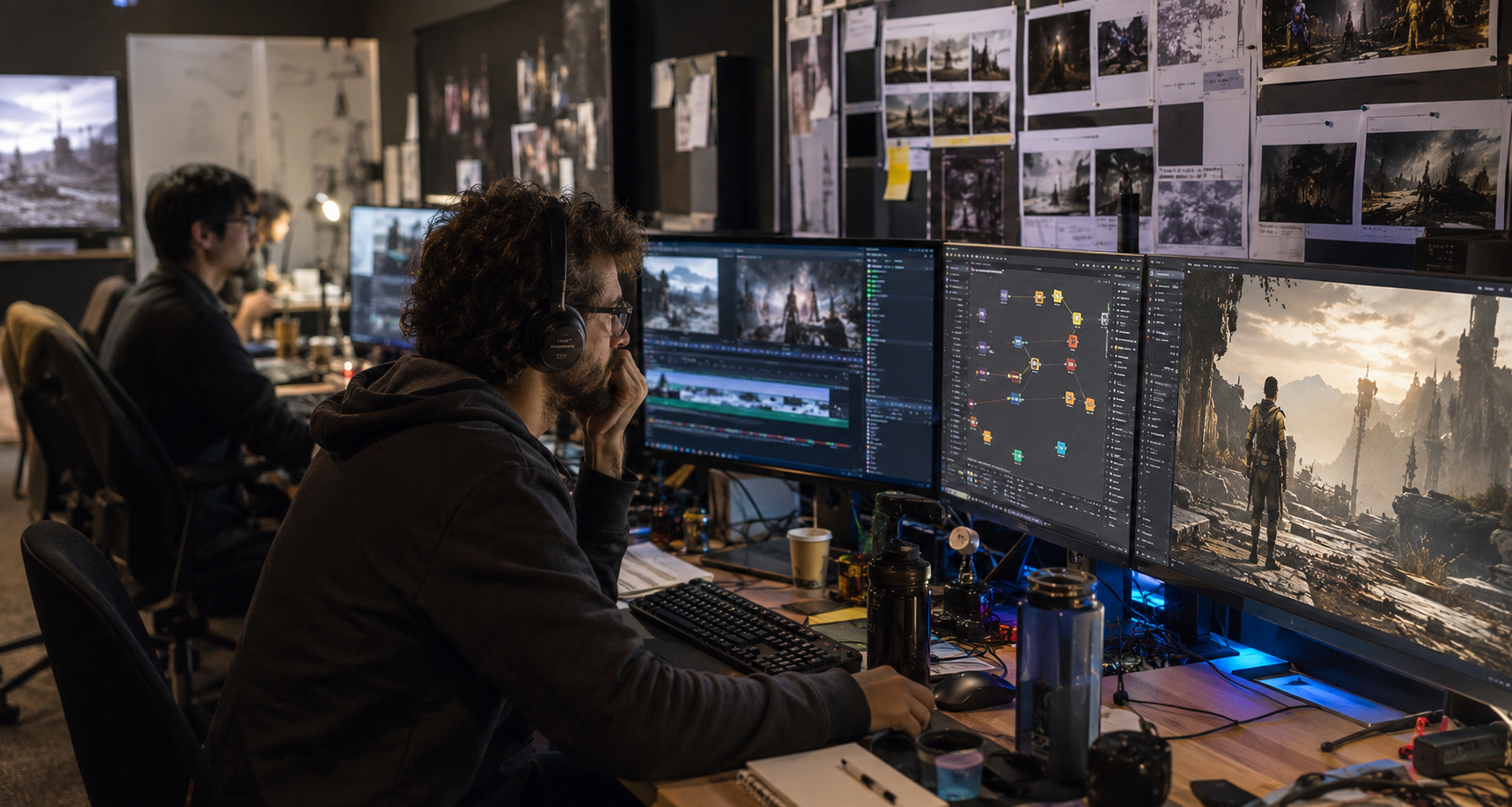
A typical AI filmmaking workflow today starts with a natural language brief. The director writes a scene description covering character, action, camera angle, mood, and setting. That brief feeds into a storyboard generator that produces visual reference. The reference images then feed into a video generation model with camera motion instructions attached. Audio is generated natively or layered in through a voice synthesis pipeline. Multiple shots are chained with transition logic. Color grading and export happen in a final post pass.
The entire workflow can be executed inside a node-based canvas. At MinionArts, this is exactly what the Vertex platform is built for: giving small teams the architecture to run production pipelines that scale without adding headcount.
The Quality Bar Has Moved
One objection that persisted through 2024 was that AI video output looked AI-generated. Motion was jittery. Characters drifted. Physics was wrong. That objection is becoming harder to sustain in 2026. Models now simulate gravity and inertia. Faces remain stable across frames. Camera motion feels like it was captured on set, not rendered by an algorithm.
The gap between AI-generated filmmaking and traditionally shot content is narrowing in ways that matter commercially. For brand films, social content, and episodic digital series, the delta is already small enough that audience perception is not a meaningful barrier.
What This Means for Production Teams
The question is no longer whether AI filmmaking tools are good enough. The question is whether your team has built the workflow infrastructure to use them at scale. That means prompt systems, model selection frameworks, asset management, and the ability to iterate quickly on client briefs without starting from zero every time. Teams that build this infrastructure now will have a structural cost and speed advantage that compounds over time.